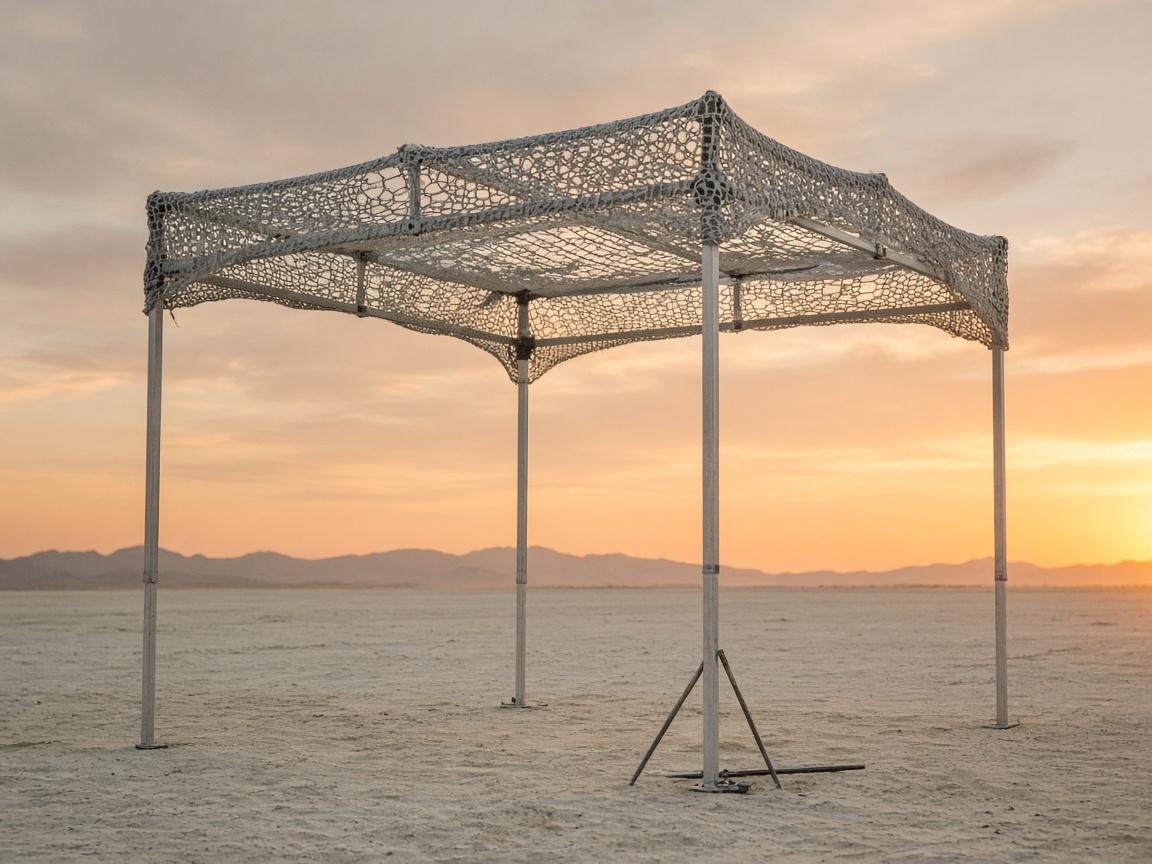
2 photos
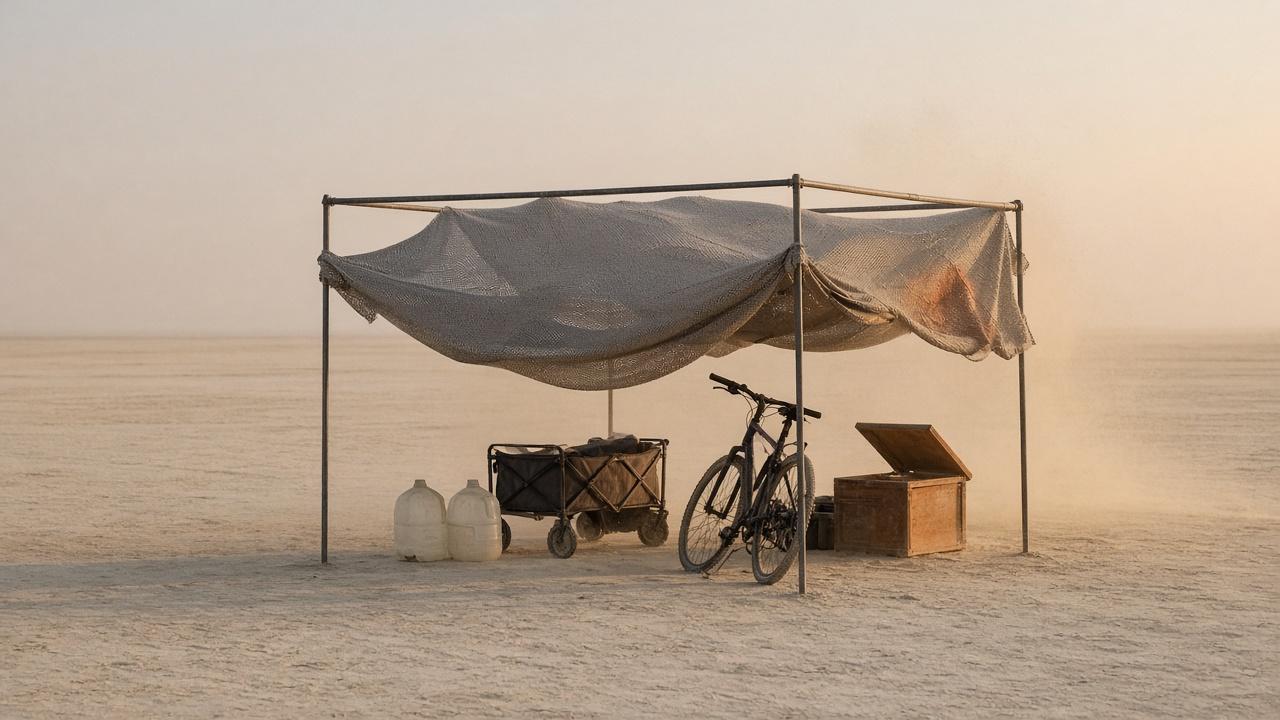
Shade
Straight-leg shade frame
A heavy straight-leg frame. The pop-up canopy it came with fails in the wind.
Buy this early
A real frame is often $150–400
Opens in a new tab.The cloth is the last layer. This is the anchoring: lags, rebar, straps, and the moment you take the walls down.
11 min read
Sits beside Best shade structure for Burning Man/Shade anchors kit/Best tent for Burning Man/Renting an RV for Burning Man
Shop the shade anchors. Each piece is its own listing. We don't ship a kit as one box.
The short shade note is the choice: open knit, a straight-leg frame, lags or rebar at every foot, straps so the panel does not balloon. This page is how that choice gets built, and when it gets taken apart. Burning Man's own securing-your-structure page opens with the number we will not soften: 75-mph winds are a common occurrence. In wind like that, they write, it is difficult to stand. Anything you bring should be attached to the ground for that reason. A camping tent that was not really staked can end up miles down the playa.
We have sat under enough failed shade to stop treating the cloth as the project. The cloth is the ceiling. The frame is the building. The anchors are what keep the building on your hex. If you only have time to do one of those well, do the anchors, and borrow a camp's cloth until yours is honest.
We are an independent outfitter. We are not affiliated with, endorsed by, or connected to Burning Man Project. The event name is used so you know which week this gear is for.
Each card opens the shop. Amazon links are affiliate links. Your price does not change. How the links work.
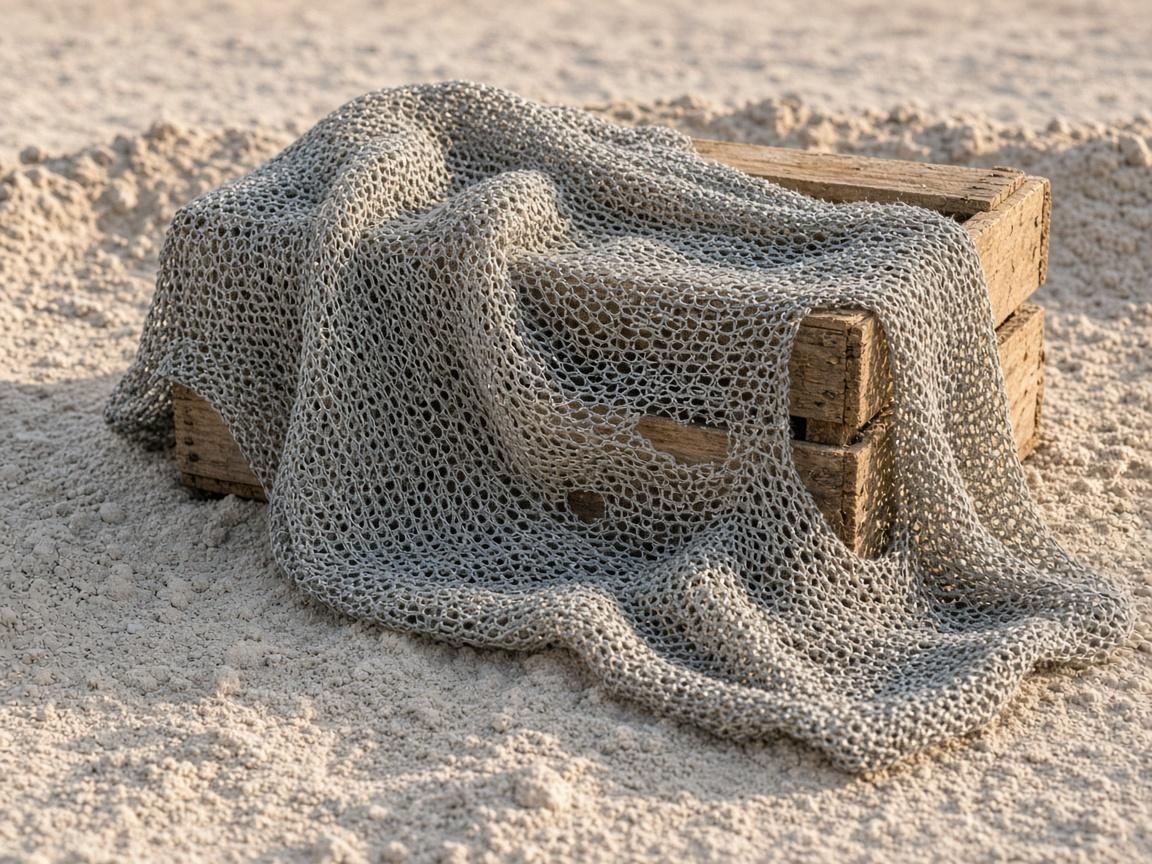
People shop "shade" and receive a picture of fabric. Out here the fabric, the structure, and the ground connection fail separately. A beautiful aluminet on a slant-leg pop-up with the stakes that came in the tent bag is three failures stacked. Fix them in order.
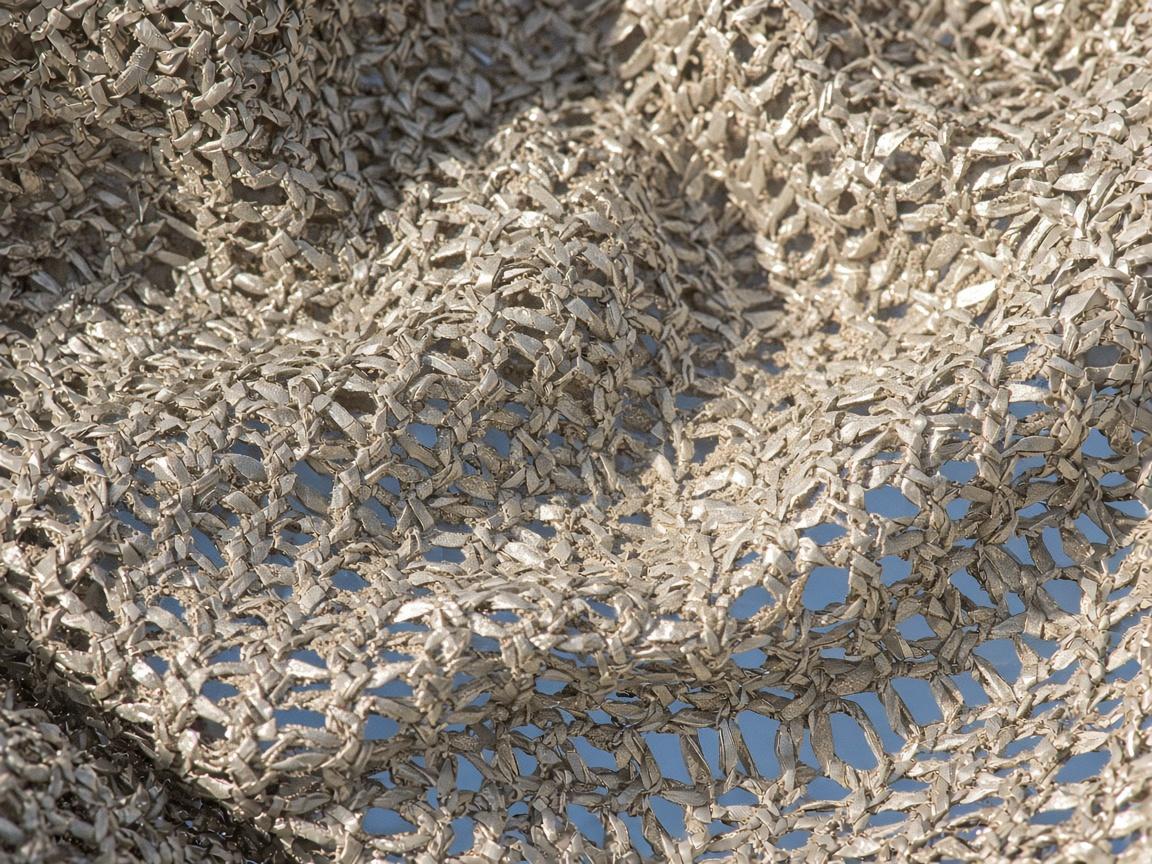
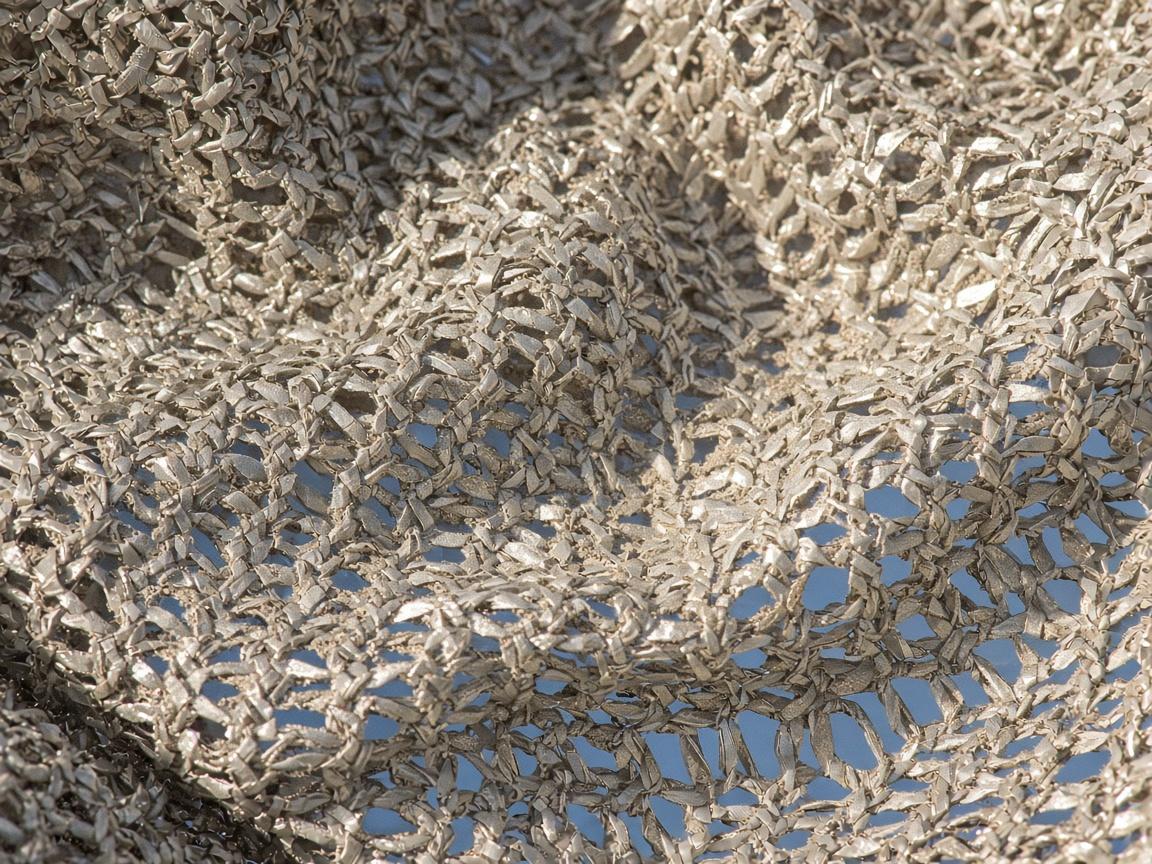
A solid poly tarp traps heat. Reflective knitted shade throws light and still lets air through. Buy it for the frame you have, with enough extra to tie the midpoints, not only the corners. Greenhouse cloth that kills airflow can do the opposite of what a hot afternoon needs. The short note's comparison is the same point in a table. If you do not already have a frame, do not buy cloth and hope.
The frame we point at has straight steel legs, ten by ten or bigger. The 10 by 10 we opened is the Impact canopy: straight-leg steel, and the solid top stays in the car. Slant-leg pop-ups walk. Put the open silver knit on the frame. Read the leg style before you pay. A frame without anchors is a kite with poles.
This is the part the product photo never shows. The playa will hold a screw that goes deep. It will not hold a short aluminum spike designed for a backpacking tent on a lawn. Their securing page says those stock stakes trade strength for weight, and that since you are not carrying the camp on your back, you should buy real ones. Their should-bring list names 12-inch tent stakes, rebar or lag bolts.
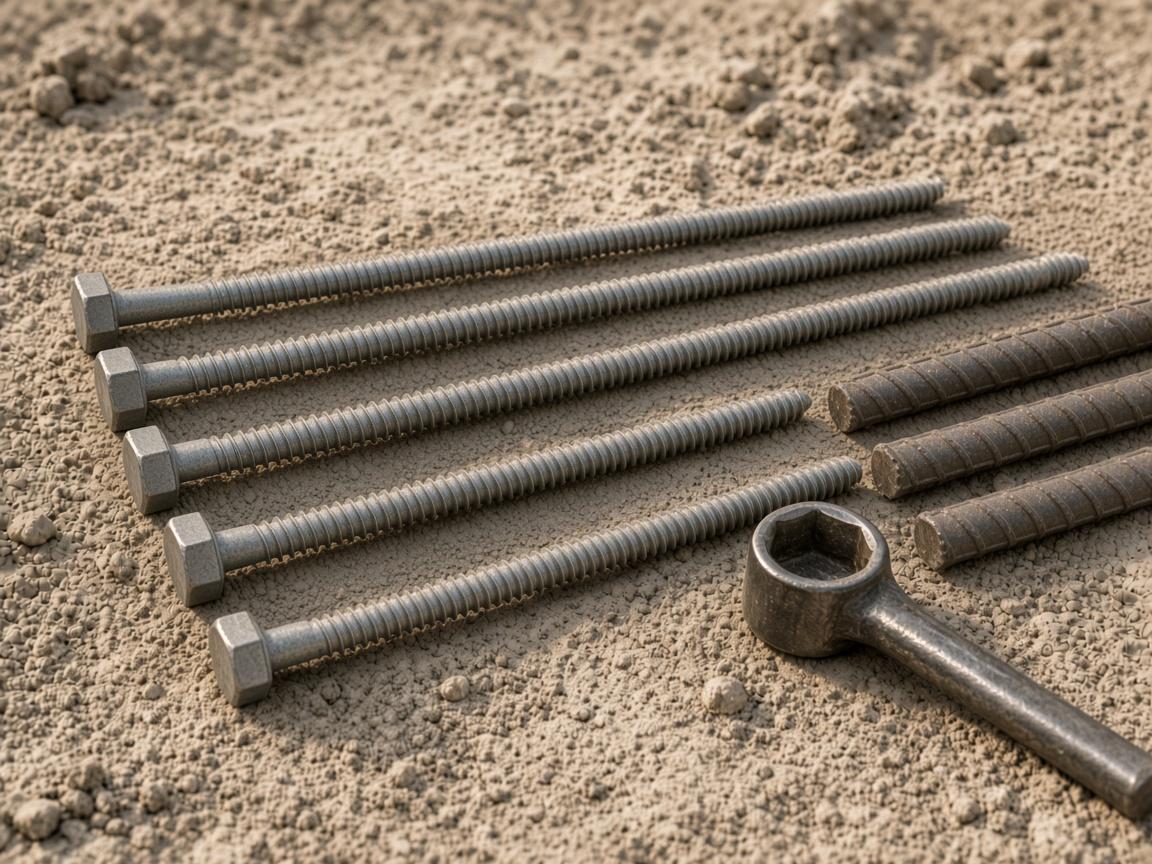
Their securing page calls long lag bolts a popular, practical way to hold shade structures, carports, and tarps. The reason they give is safety as much as strength: a lag can sit flush, so there is nothing standing up to catch a shin. They describe people using bolts on the order of 12 to 14 inches for the things they worry about blowing away, and shorter bolts, around 8 to 10 inches, only for flooring. Hardware stores, they note, often stock the shorter ones, and the longer ones may be a special order. The lags we list are that job. The 12-inch hex-head pack we opened is 3/8 inch, washers included, twenty-five in the box. They are 12 inches, not 18. Match the length to the structure, and read their page before you decide a handful of short screws is "close enough."
One at every foot, not only the corners. The corners are where the wind starts. The middle feet are where a long frame folds. Drive the lag until the foot of the frame is down, not until the head disappears into the playa and you cannot get a socket on it at exodus. Dust packs a hex head. Leave yourself a way to back the bolt out.
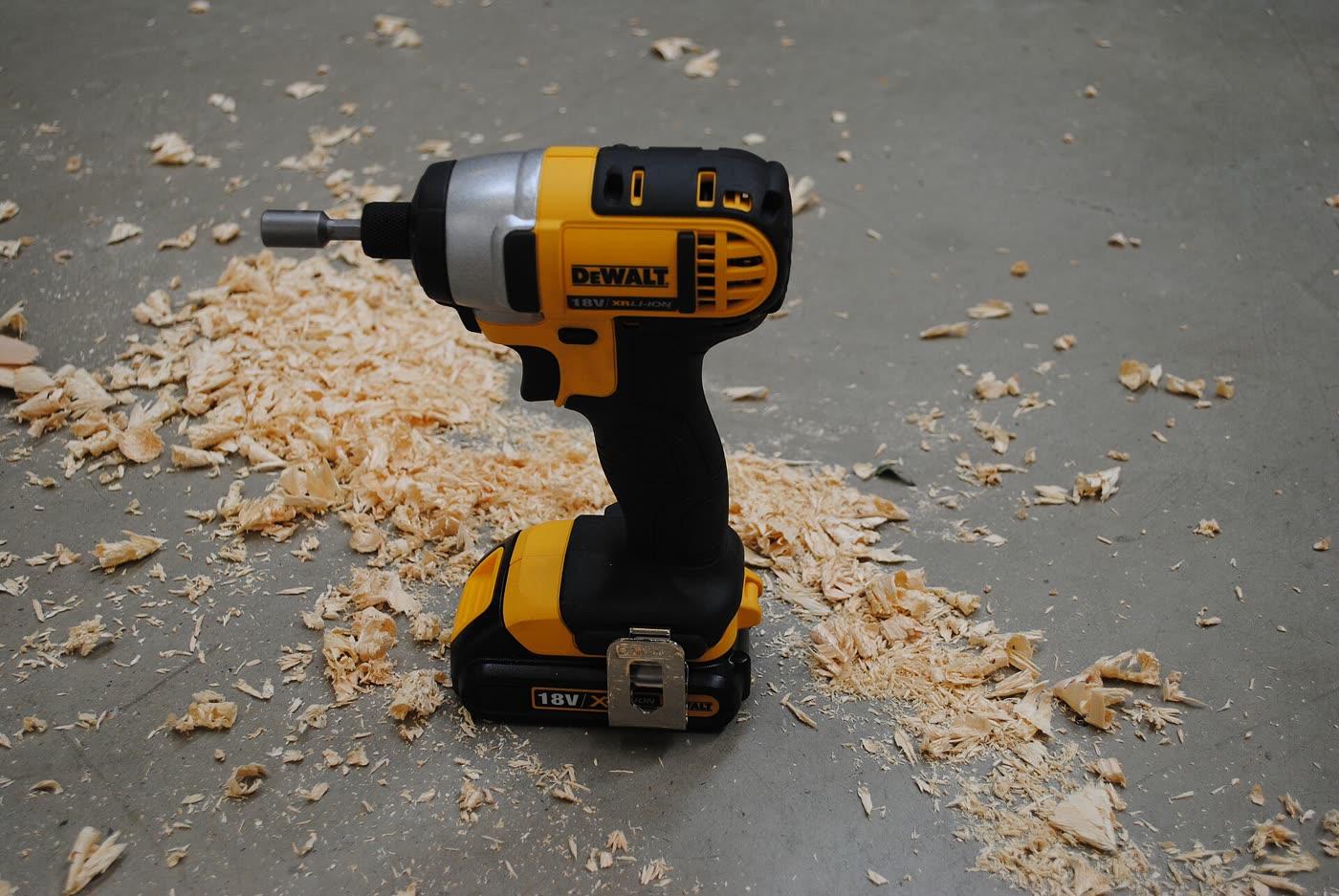
An impact driver is how a camp finishes before the day gets away. A socket on a ratchet will do it. It just takes the afternoon you wanted for something else. The driver we list is a DeWalt 20-volt tool, tool only, so it can share a battery with the DeWalt foot of the blower. A Makita pack will not run it. Gloves on. The playa is abrasive, and a spinning socket does not care about your knuckles.
Their page also describes a way to tie a ratchet from the top of a pole down to a lag, sometimes with a short piece of chain and a washer so the bolt does not pull through. Some camps set that anchor a few feet out from the pole. Their page notes that attaching at the base avoids a tripping hazard and can still hold. We are not going to pick a fight with a structure we have not seen. We are going to say: the lag holds the frame to the ground, and a strap still has to keep the cloth from becoming a wing. If a line crosses a path, mark it. An invisible guy line at night is how a neighbor meets your camp.
Rebar is the older method, and their securing page still teaches it. They describe #4 bar, which is half an inch, bought in long sticks or in pre-cut lengths, driven with a small sledge because a claw hammer and a hope of finding a rock will not do it. There are no handy rocks on the Black Rock Desert. That sentence is theirs, and it is funny until you are holding a stake and a shoe.
The hazard is the end that sticks up. Their page says a large number of injuries come from open rebar, and both the securing page and the Survival Guide say the ends must be capped or bent into a candy cane. Bending is their preferred method: a hook you can pull with another stake, and a line that cannot slip off the top. Capping is the other honest option. Tennis balls and soda bottles show up in their writeup as the cheap version, and they are honest that those are not pretty. They also blow away or crack.
We list orange mushroom caps sized for the bar camps actually drive, and we still tell you to candy-cane any stake that lives where people walk if you can bend it. A plastic cap makes the end blunt and easy to see. It is not a promise that nobody can be hurt. Push a cap on every vertical end before you call the shade finished, including the ones that only stick up a few inches. The caps come off when the stakes come out, and they go back in the bag. A cap in the dust is moop.
The rebar length in our gear note is 18 inches, which is a common stake to buy already cut. Their should-bring list says 12-inch stakes, and their securing page talks about longer stock you cut and bend yourself. Those are not the same object. A short stake in a tall sail is a different bet than a long stake under a modest frame. Read their page, look at the structure, and do not let our shopping link talk you into less stake than the wind wants. Pull every one. Their leave-no-trace section says tent stakes are now the leading source of moop, and that they are dangerous. Mark them before they go in so the count at the end is a count, not a search.
What it is for
What their page says
At exodus
| What changes | Short tent stake | Lag bolt | Rebar |
|---|---|---|---|
| What it is for | A backpacking tent on gentle ground. | A frame foot that should sit flush. | A lot of points, if you cap or bend every end. |
| What their page says | Stock stakes trade strength for weight. | 12 to 14 inches is what they see holding shade and carports. | Cap it or bend a candy cane. Open ends injure people. |
| At exodus | Often bent, and easy to leave. | Backs out with a socket, if you can still reach the head. | Pull it. A piece left behind finds a tire. |
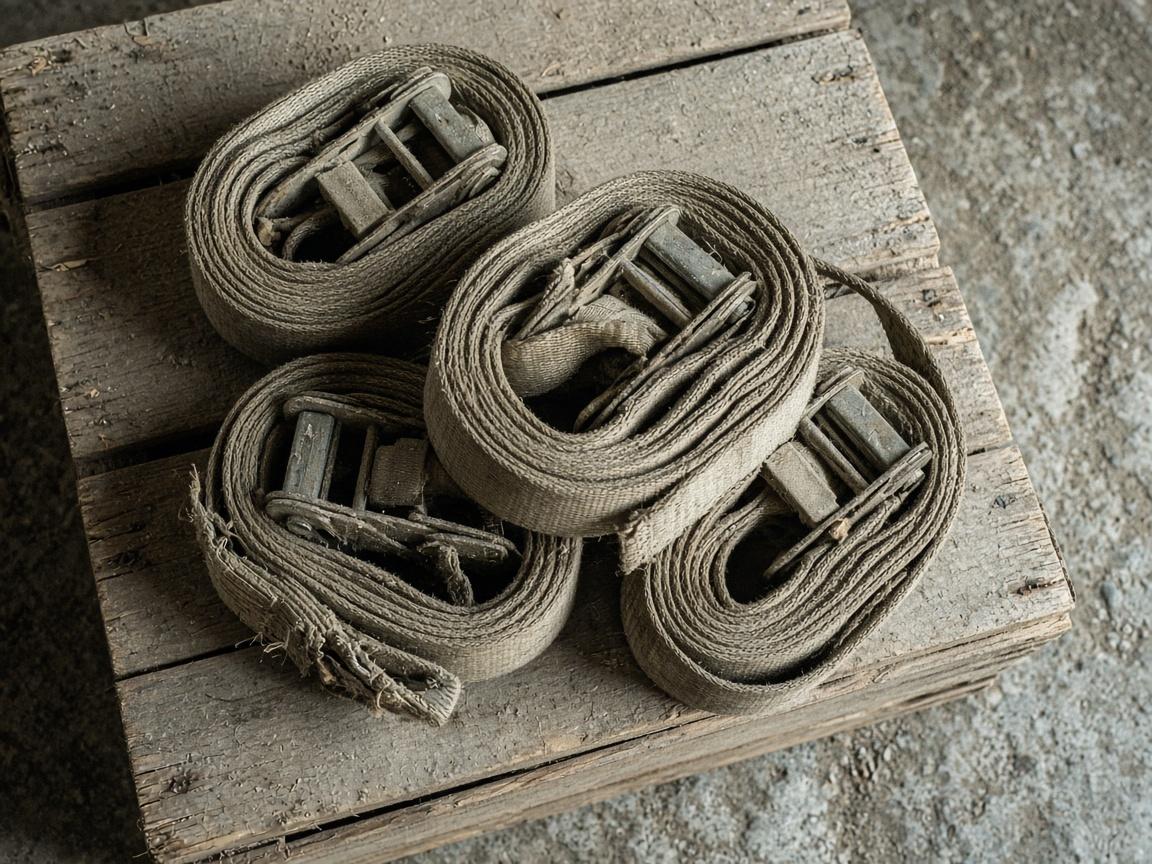
Ratchet straps hold the load. Rope slips when you are tired, and a bungee surrenders. Four straps is a start. A real shade uses more, including one across the middle so the panel cannot balloon. Know the working load. These are cargo and shade straps, not a swing and not a climbing system.
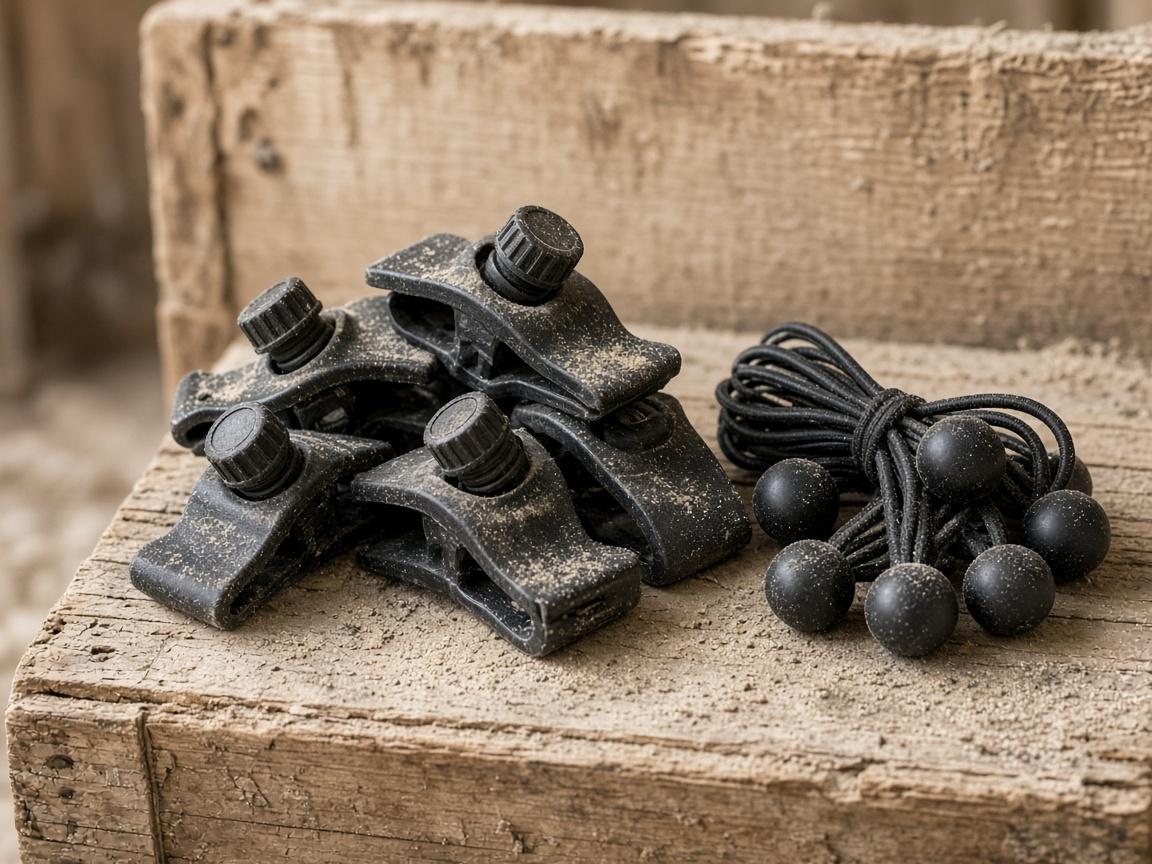
Tarp clips and short ball bungees grip the hem and let the cloth move a little. Clip the hem, not a single thread of the open knit, or the cloth walks out of the jaw. Space them along every edge. The clips do not anchor the frame to the playa. In a real wind, straps and lags are what keep the structure here. Count the clips at the end. A clip in the dust is moop, and a bungee left on the frame goes home with someone else.
Dust packs a ratchet. Open it, knock it out, and do not store it clenched full of playa or it will be a fossil in June. Zip-tie tails from any light you add to the frame get cut flush and pocketed. A tail on the ground is moop with a sharp end.
Overhead cloth and a wall are different tools. The overhead layer wants to breathe. A wall is privacy and a little relief from the low sun. On a clear afternoon the sun that cooks a camp is the west side, late. A hemmed tapestry there, tied at every corner and along the edge, gives you a room. Leave a way for air to leave. Four solid walls and a solid roof are an oven and a sail. We do not have a published wind rose we are willing to treat as a promise about your hex. Watch the first day. Put the closed side where the sun and the dust are actually coming from, and keep a side you can open.
The tapestry we point at is large, hemmed, with grommets or a sleeve, and without fringe, sequins, or loose threads. Those become moop the first time the wind tests the corner. It hangs under the shade, beside the Aluminet, and it comes down before a wind event. A single clothespin is not an attachment.
Empty chairs, card tables, and coolers are shade-adjacent kites. Their Survival Guide lists them among the things a gust will throw. Weight them or put them away when you leave camp. A chair on a rug in the shade is furniture. A chair in the open is a projectile.
The Survival Guide says dust storms can produce whiteouts, and that wind can exceed 75 mph and throw tents, chairs, and ice chests. If you are caught out, they say to seek shelter, and if you cannot, to sit down, turn your back to the wind, cover your face, and wait. That is the moment for the goggles and the respirator, which is a different guide. For the structure: get people out from under anything that is starting to walk. Drop the cloth. Drop the walls. A frame with no sail is a much smaller problem than a frame with a wing.
Weight the interior corners of the tent, which is their instruction, not a decoration tip. Do not spend the whiteout hunting a stake two blocks downwind. Do not be the person still clipping a tapestry because it looks unfinished. Unfinished and on the ground beats finished and in the neighbor's kitchen.
After dark, the stake you cannot see is the stake someone walks into. Small lights on the lines and the caps mark the hardware. They do not replace the lag or the rebar. If one falls off, it is moop, so they come down with the shade. A light on a stake is not a bike light.
Before you pull anything, count the lags, the rebar, the caps, the clips, and the straps against the number you wrote down when they went in. Their leave-no-trace section asks you to account for every stake, and a magnet bar is part of the final pass they describe. A magnetic sweeper finds steel. It does not find aluminum tent stakes, so those still need eyes. Low light shows what noon hides. Walk the hex shoulder to shoulder, which is also their instruction, and then do it again where the frame stood.
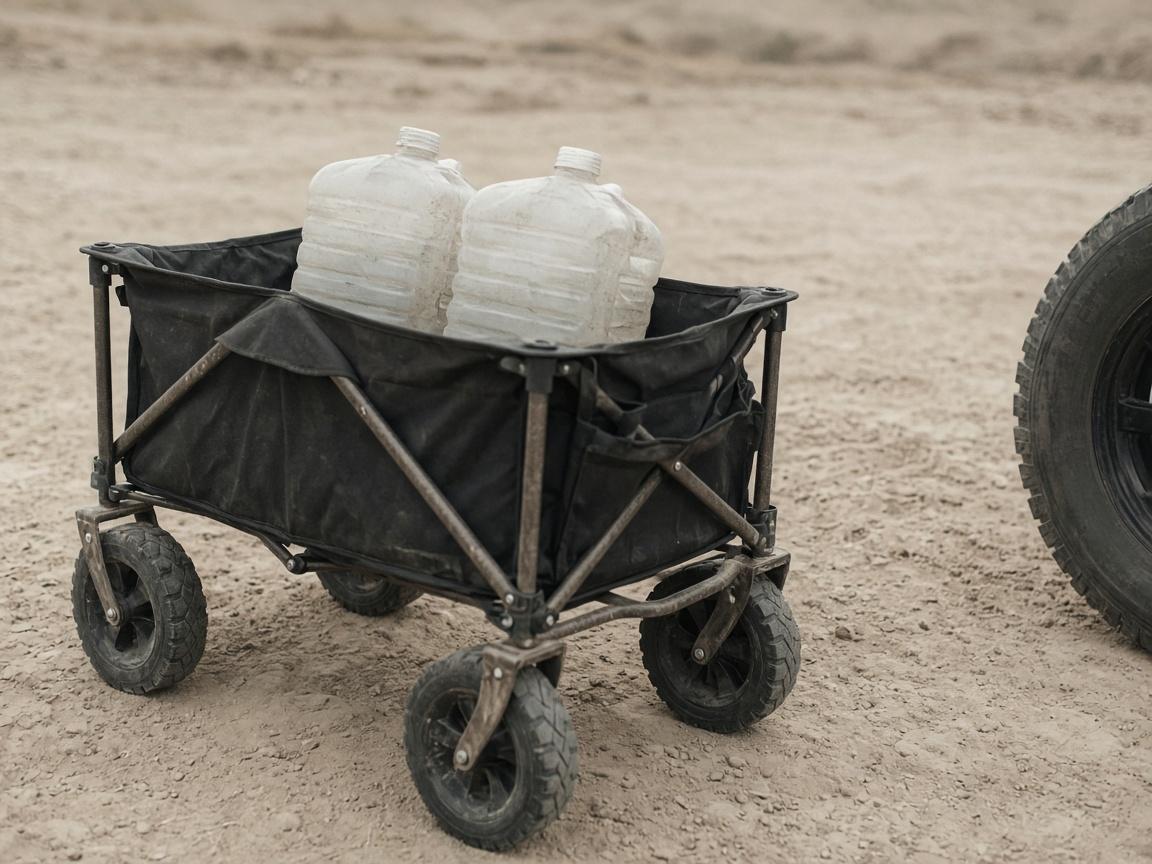
The shade kit is the shopping pile for this page. The camp cart adds the cot, the water, and the lights around it. If the tent is your only shade, it is the wrong tent for noon, which is the whole point of the tent note. Their camping tips index is the front door to the securing page, the water page, and the rest of the city's own advice: burningman.org camping tips.
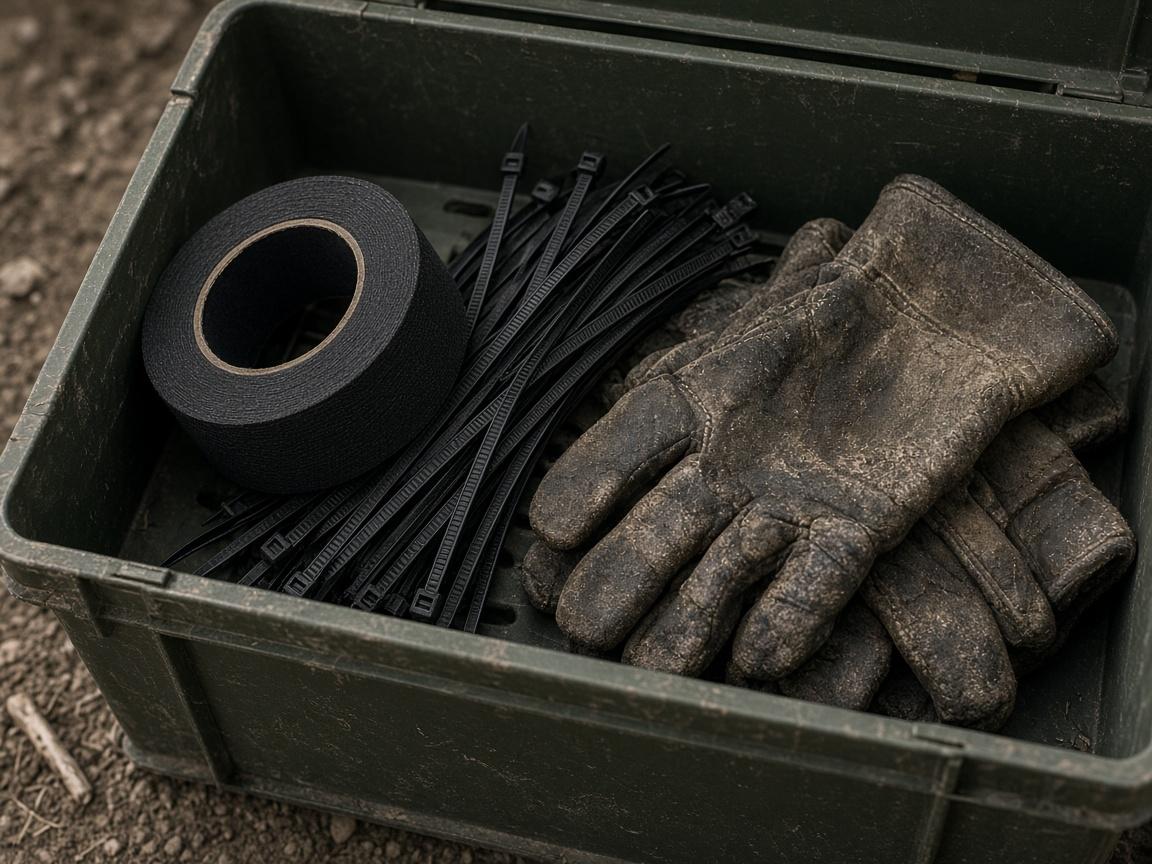
Camp
For rebar, ratchet straps, and the bin lid that fights back.
Often $12–25
Opens in a new tab.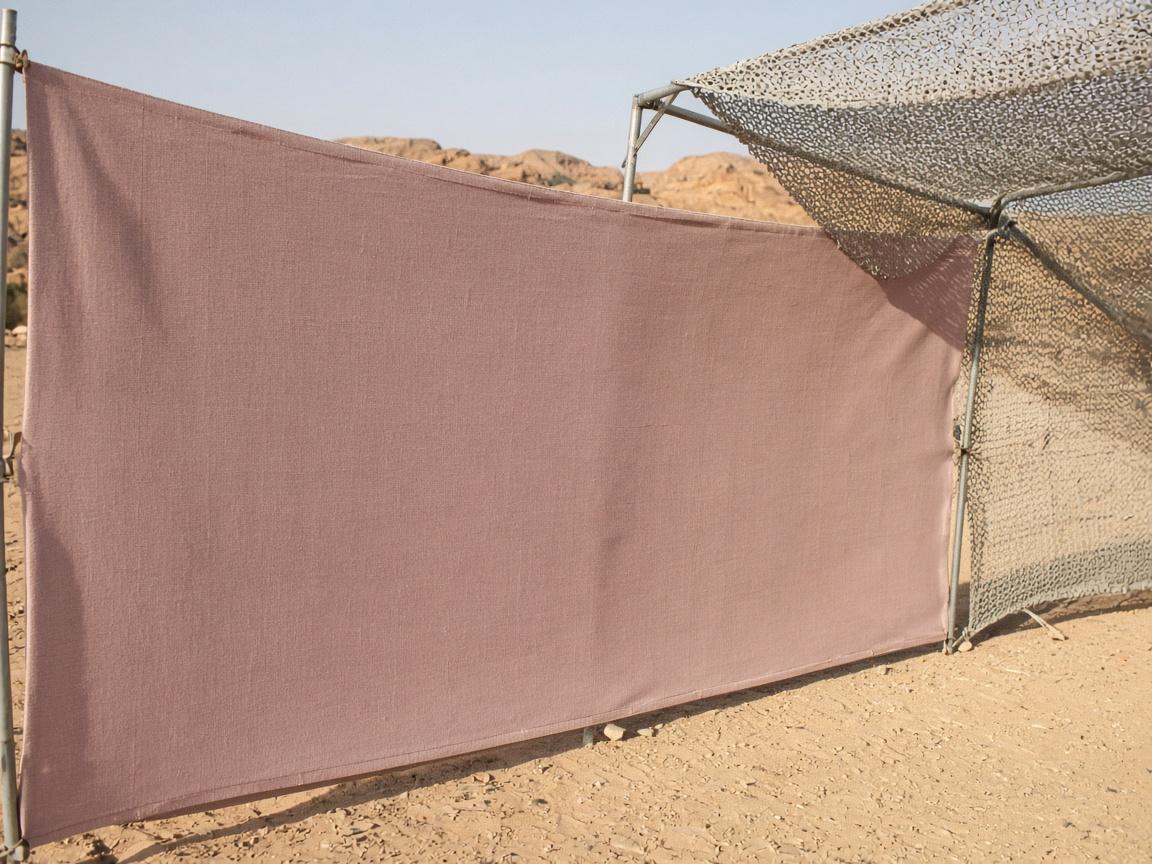
Shade
A hemmed cloth wall for privacy. The roof is still Aluminet.
Buy this early
A large hemmed one is often $20–50
Opens in a new tab.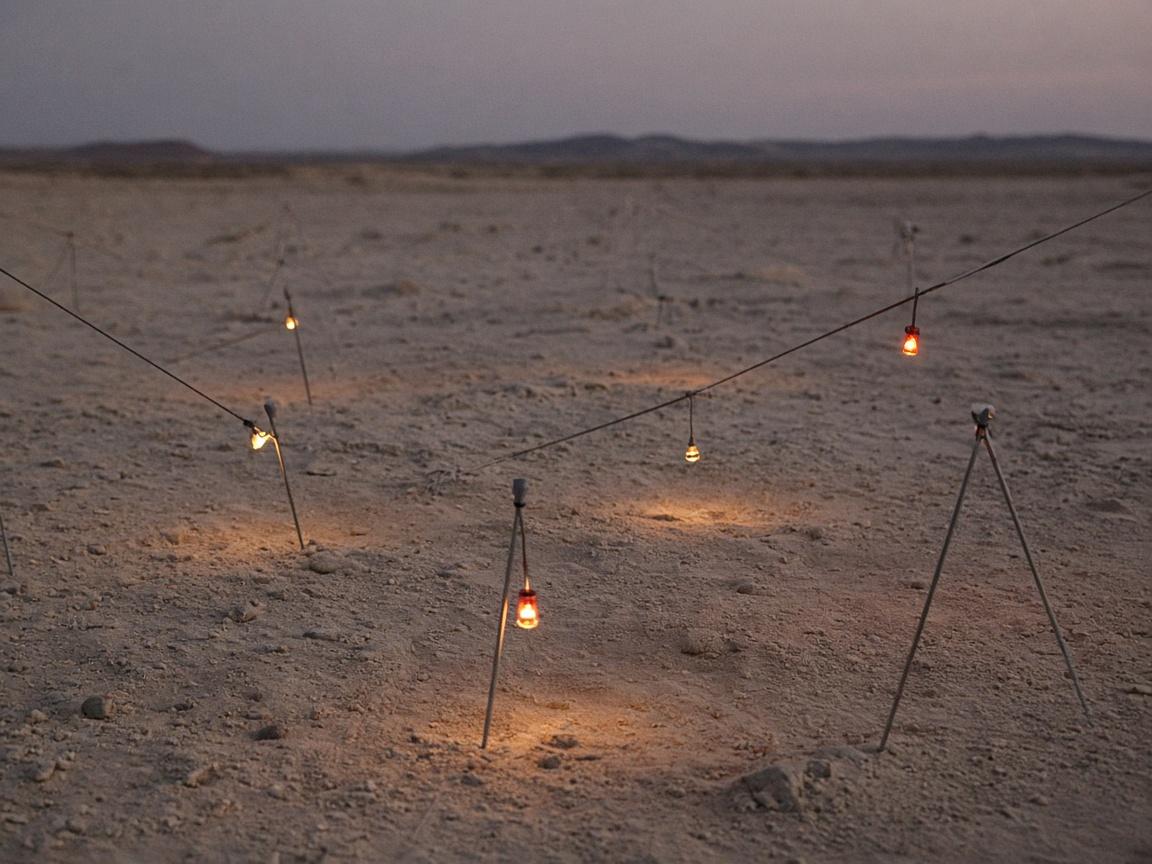
Shade
Small lights you hang on guy lines and stake tops so nobody walks into them.
Buy this early
A set is often $20–40
Opens in a new tab.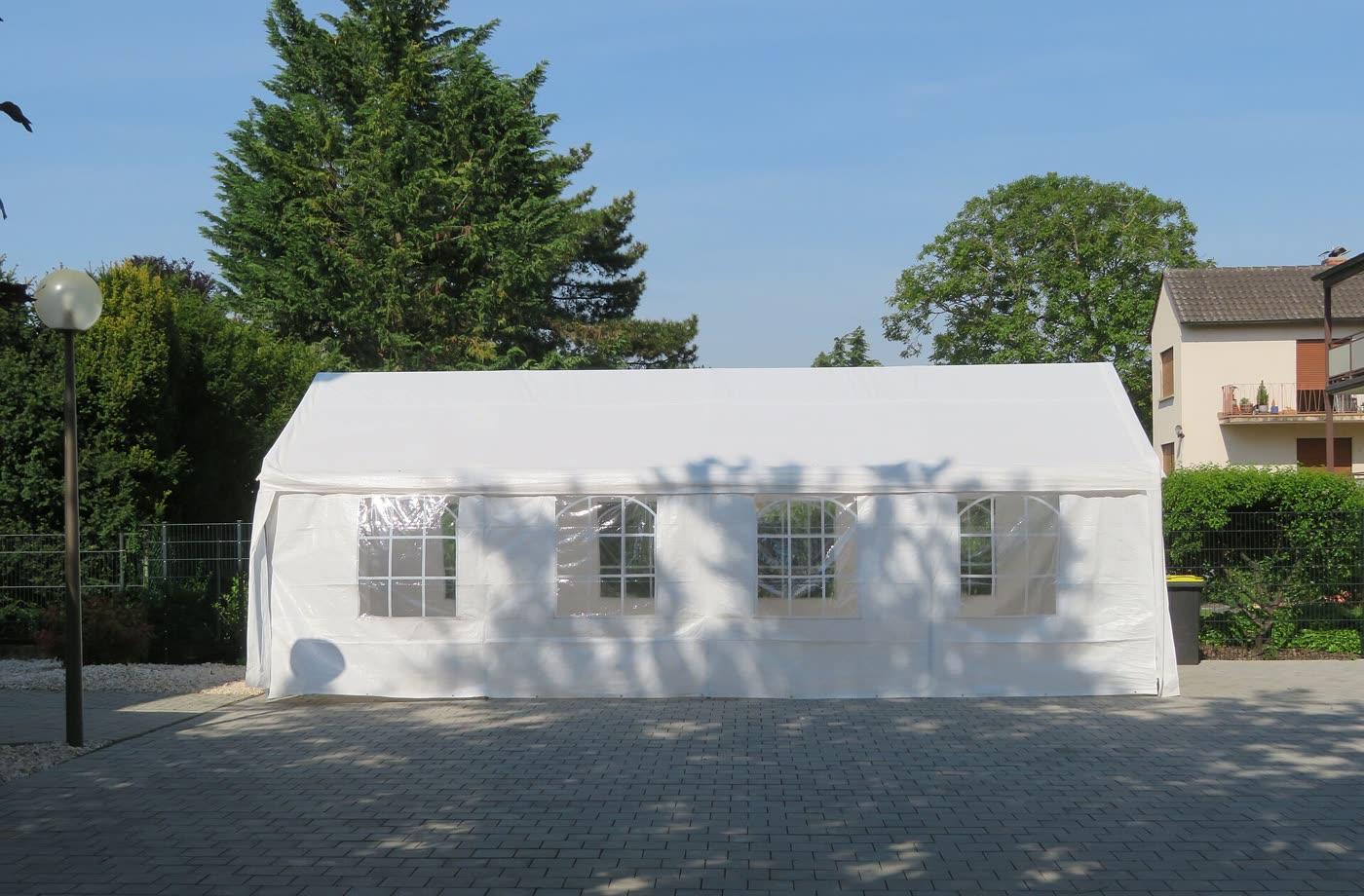
Impact Canopy
A straight-leg steel frame. The solid top that comes with it stays in the car.
Buy this early
Often about $250
Opens in a new tab.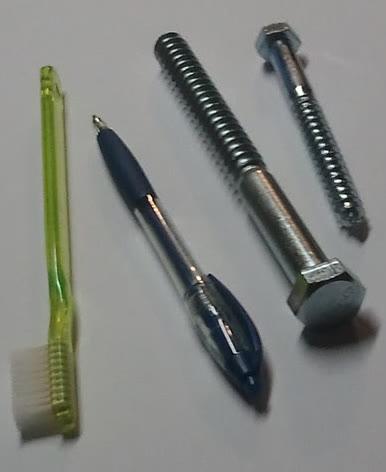
HROMIGRY
Twelve-inch hex-head lags. One at every foot, and they back out.
Buy this early
Often about $35
Opens in a new tab.Coghlan's
Two clips that bite a hem. A start, not the whole roof.
Often about $10
Opens in a new tab.RV rental
These open the company page for a fleet that publishes a Burning Man rule. Your price does not change. We are not affiliated with Burning Man Project. How the links work.
Links open the company page. None of them carry a tracking code.
Renting an RV for Burning Man/Compare the companies/RV checklist
A kit is the shopping list for one job. Each piece is its own listing. We don't ship it as one box.