Cygolite
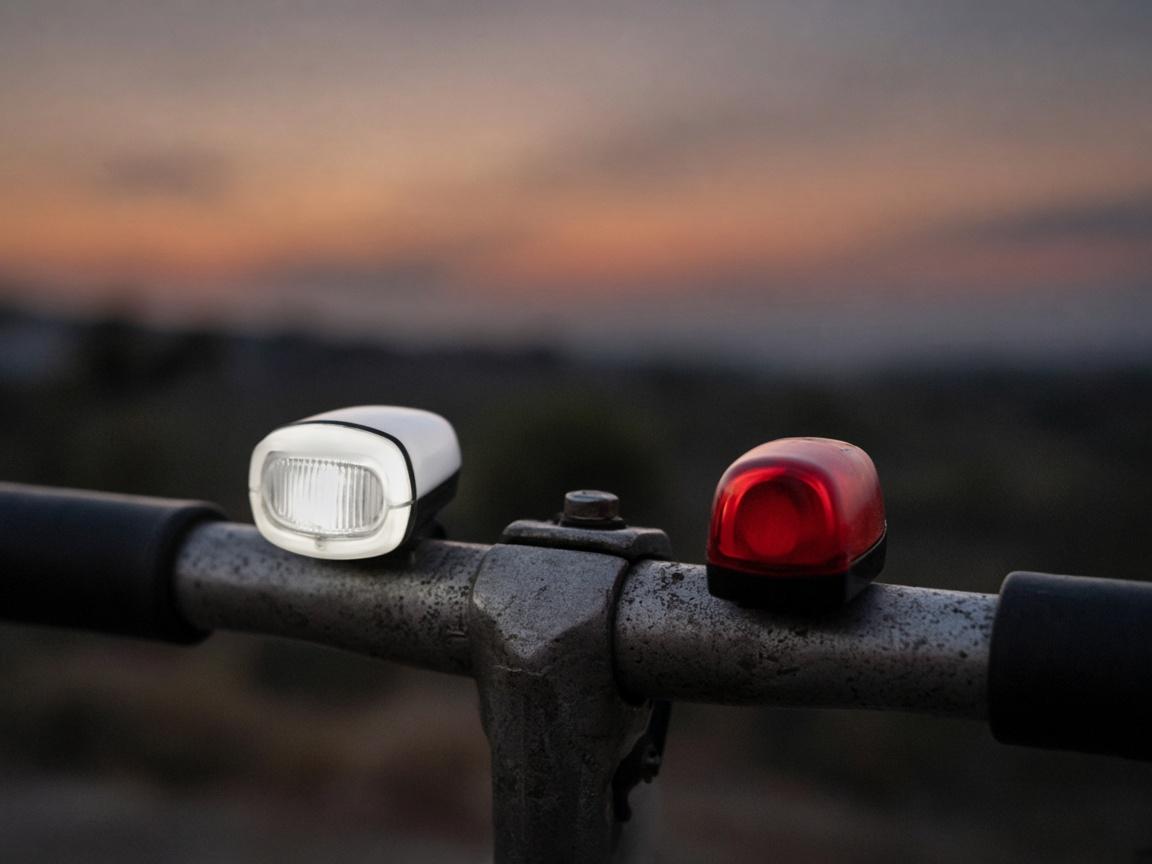
Cygolite front and rear light set
A throw forward and a flash behind, on mounts that stay put.
Buy this early
Often about $86
Opens in a new tab.Charge them, mount them so dust cannot peel them off, and do the flat once at home. A rental is a frame.
9 min read
Sits beside Burning Man bike lights and a lock/Where to pick up a rental/Night bike kit
Shop the night bike. Each piece is its own listing. We don't ship a kit as one box.
The short bike note is the minimum: a light in front, a flasher behind, a flag, a lock you use, a way to fix a flat, and a plan for when the group splits. This page is the prep, done before the car is loaded, plus the parts a rental does not include. The Survival Guide says the playa is very dark, there are many riders, and you light the bike to avoid injuring yourself and others. It also says glow sticks and bracelets do not cut it and become trash. Lasers are not bike lights. Their must-bring list names lights for your bike and your person.
Lumens go up every product cycle. The failures that repeat are softer. A rubber mount that slides. A sticker on a dusty frame. A light left on the bike while you go into a party. A battery you meant to charge at camp, where the outlet is a rumor. We pack for those failures.
We are an independent outfitter. We are not affiliated with, endorsed by, or connected to Burning Man Project. The event name is used so you know which week this gear is for.
Each card opens the shop. Amazon links are affiliate links. Your price does not change. How the links work.
Their should-bring list says a working bicycle, and that mountain bikes or cruisers with balloon tires are best. A skinny road tire in this dust is a long walk. One working brake is the minimum. If the brake needs a thought, fix it at home, in a stand, with a light you can see by. The playa is a bad workshop.
Write your name, your camp address, and a way to reach you on the frame. Their guide asks for the name, the playa address, and an email or a phone on the bike, because a decorated bike is less likely to be "borrowed," and a labeled bike is how Lost and Found has a chance. Decorations have to stay attached. A streamer that falls off is moop. El wire is sparkle. The flag and the lights are the job.
If you flew in, start with the rental page. Pickup is in Reno, Sparks, Nixon, or Gerlach, and you ride through the gate. Confirm what the shop mounts. Many bikes arrive with a basket. Almost none arrive with a light you should trust for a week, a lock you will be happy to carry, and a tube that matches. The RV and truck pages are a different errand. Do not let a vehicle reservation convince you the bike is handled.
We want a front light that throws on the ground and a red rear light people can see through dust, on mounts that clamp or bolt. Skip a light that only sticks on with adhesive. Dust kills that bond, usually at the moment you needed the light. Charge both before the gate. A dead light is how collisions start.
Take the lights with you when you park. Nice lights migrate, including from "right outside camp." A quick art stop is still a stop. If the mount is fiddly with gloves, practice it at home until it is not. Put a spare charged battery, or the charging cable, in the same pouch as the lights so the pouch is the whole system. The cable you forget is the cable you needed.
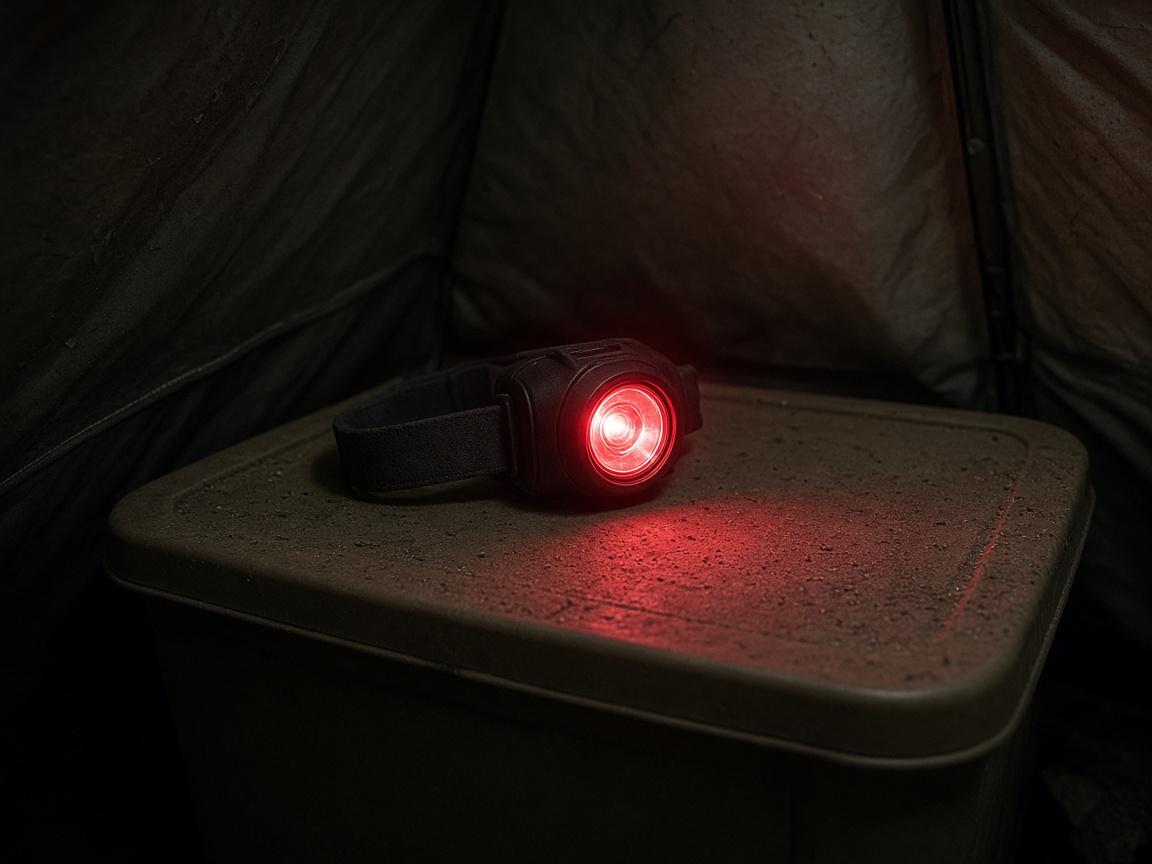
A headlamp is not a substitute for a bike light, and a bike light is not a substitute for a headlamp. You will lock the bike and then walk. The headlamp, with a red mode for camp, lives on your body for that walk. One lamp is a single point of failure, so spare cells live in the same box. Their guide asks for flashlights and spare batteries and notes that headlamps are useful. We agree, and we still want the bike's own lights, because a lamp in your hand is not a lamp on the bike the rider behind you can see.
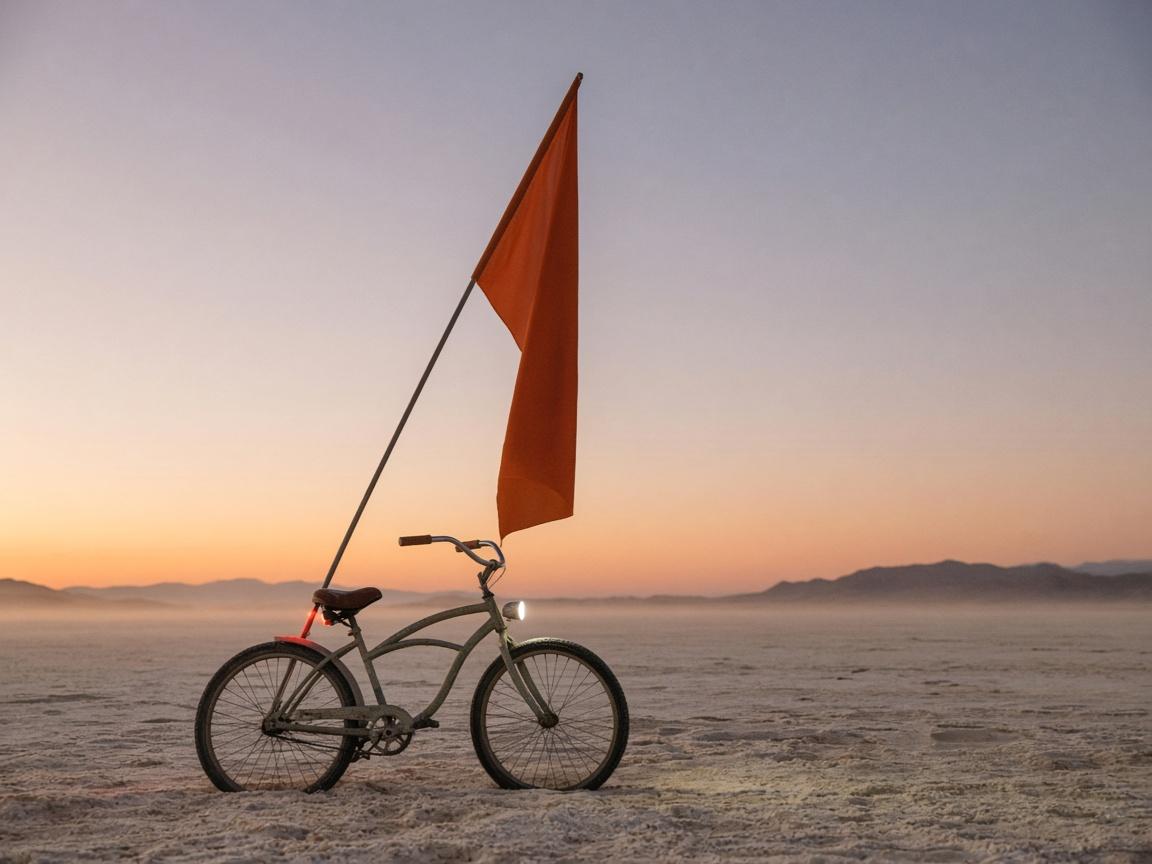
A tall flag lifts you out of a crowd of other handlebars. A pool noodle is the camp version because it stays up and it bends. Put it on before you leave camp. A flag that folds into the spokes is a different problem. The flag is not a light. You still need the beam on the ground and the red light behind you.
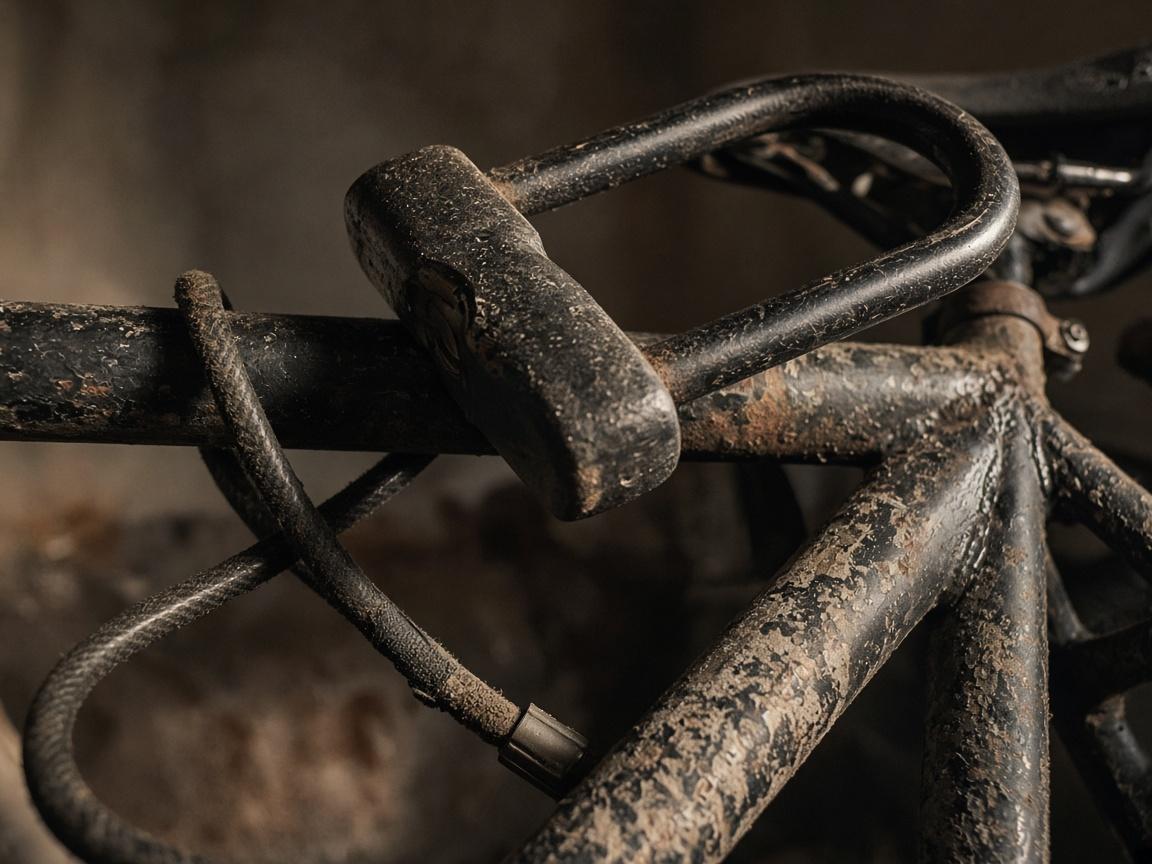
Their guide says to always lock the bike wherever you leave it. The only bikes that should never be locked, they say, are green community bikes. Never lock to guy wires or other structures. That is a safety hazard and it can disrupt a burn. A thin cable has let a bike leave when someone just started pedaling. A U-lock through the frame, with the cable only for a wheel, is the habit. No lock is a bank vault. A hardened lock through the frame changes the casual theft.
Dust the keyway before exodus, when you are tired and the lock is full of the week. If the key lives on a lanyard you cannot lose, you will still have a bike on Monday. A lock in the tent while the bike is "just for a second" is the week the bike changes owners.
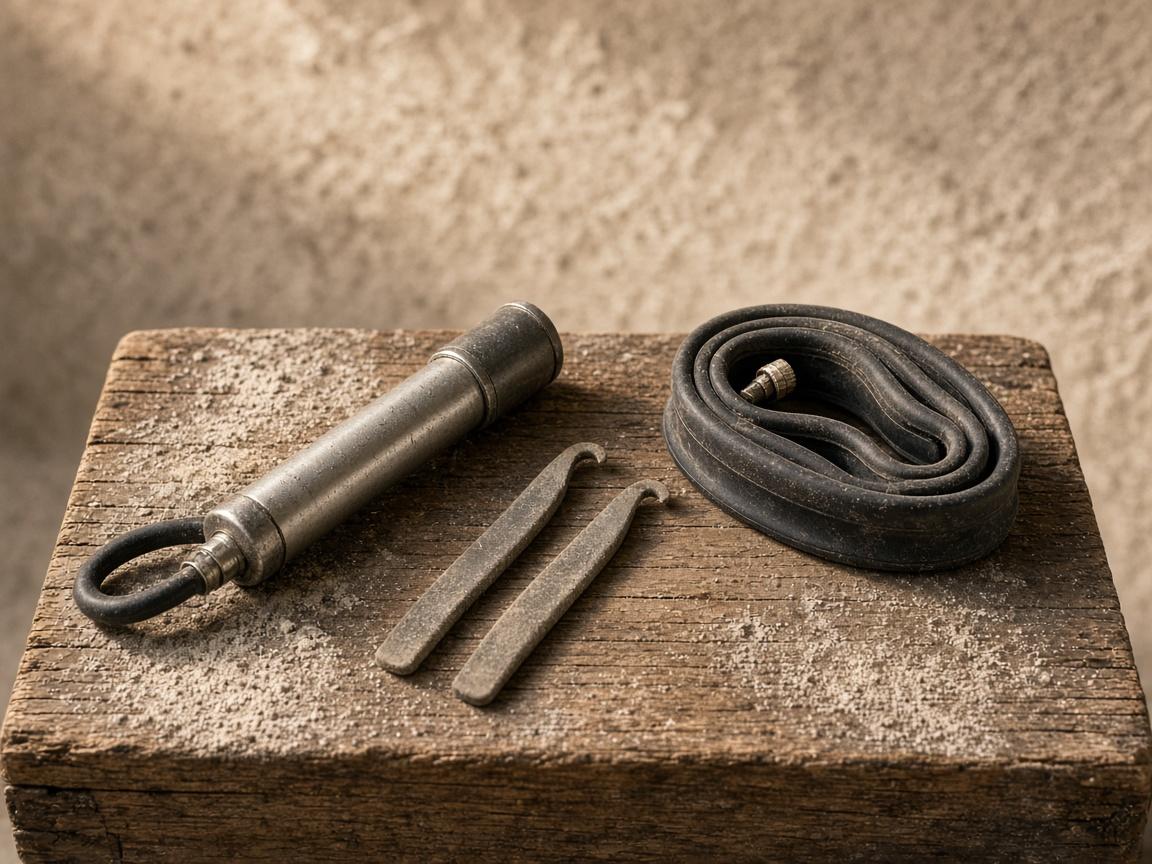
Gift repair camps are a gift, and they run out of the common tube. A pump, a spare tube that matches your valve, and a pair of levers belong on the bike. Presta and Schrader are not interchangeable. Learn the swap in a driveway, with clean hands, before you do it at 1 a.m. with dust in the tire. Strap the pump where you can reach it without unpacking a bin.
The repair kit is that pile. Wet oil and this dust make a paste. Dry chain lube goes on at home, the extra wiped off, and the bottle comes for one midweek pass. Wipe the chain first. Extra lube on the frame collects dust and then rubs onto your calf. The rag comes home. If the week turns to rain and mud, their guide says to walk, because playa mud clogs wheels. A dry-lubed chain will be gritty after that. Accept it until you can clean it. Do not be the rider still pedaling through a wet playa because the light was charged.
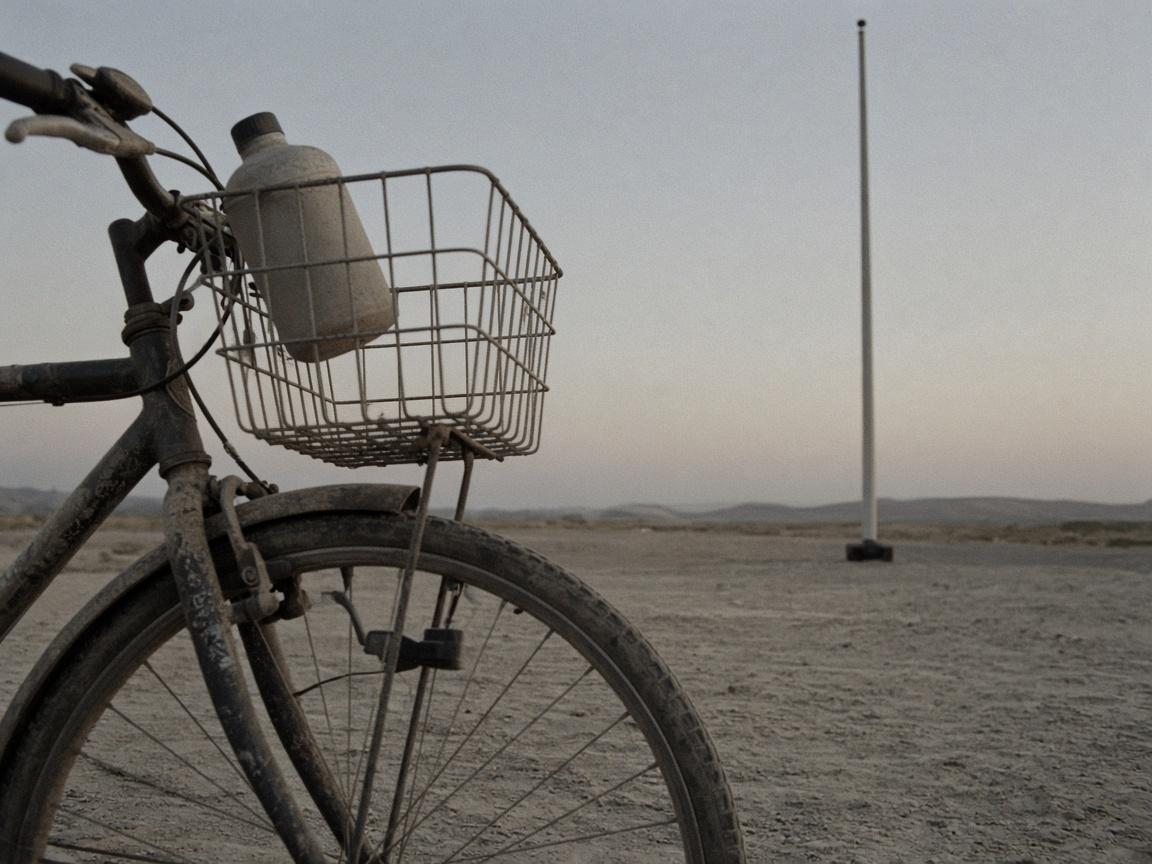
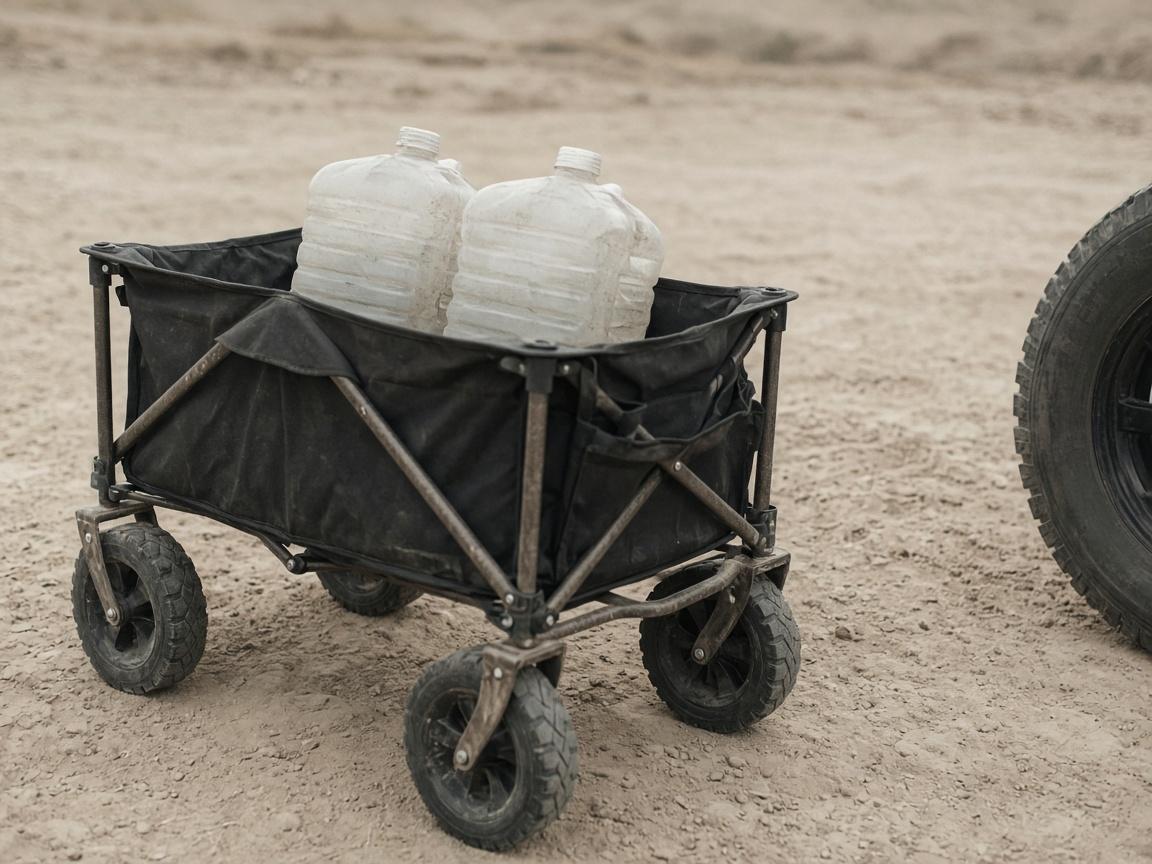
A backpack on a cruiser cooks you and then gets set in the dust. A front basket holds water, a layer, goggles, and a closed bottle. Check the mount against your bars before you leave Reno. A basket that blocks a brake cable is the wrong basket. It is not a cargo trailer. A case of water belongs in the wagon. Write your name on the basket and take it with you if the stop is long. Lights still want a hard mount. The basket is not the mount.
The speed limit they publish for the city is 5 mph, all the time, and pedestrians and bicycles have the right of way over motor vehicles. That number feels absurd until you are in a crowd of unlit people and art. An e-bike that can do neighborhood speeds is a liability here. Their 2026 guide tells operators to use the lowest assist, warns that speeding can mean the bike is removed, and sets the shape of an allowed bike: recognizably a bicycle, working pedals, two or three wheels, motor up to 750 watts, top rated speed no more than 20 mph with a 170-pound rider. Not a moped. Read that section again in the current guide before you ship one. We are not the people who license it.
Their guide also asks you not to bring bikes, chairs, or large coolers to the larger burns, where they become a hazard. Park the bike in a lit, locked place and walk in. The lock habit is the same habit. The lights stay on your body so the walk in is not a dark one.
Charge the lights, the headlamp cells, and the power bank before you reach the gate. A small bank runs a phone and a couple of lights. It does not run camp. If the lights are USB, the cable goes in the pouch. If they are removable batteries, the spares are labeled, because a dead cell and a fresh cell look identical at 2 a.m. Heat and dust are both bad for packs. The bank stays in a pouch, out of the noon sun, not in a closed car.
The night bike kit is this shopping list. Finding the people you meant to ride home with is the next problem, and lights do not solve it. Name a place and a time before you split. The night guide is that plan. If each person has a Totem Compass, bond them at camp before anyone leaves. The short bike note already says so. This page stays on the machine.
A kit is the shopping list for one job. Each piece is its own listing. We don't ship it as one box.