Jackery
Jackery Explorer 300
About 300 watt-hours for lights, phones, a fan, and a laptop.
Buy this early
Often about $200–300
Opens in a new tab.A bank for the phone, a small station for a fan and a laptop, and a fridge that is a different project. Solar is a top-up.
9 min read
Sits beside What Burning Man week requires/Power gear/Camp cart/Renting an RV for Burning Man/RV generator at Burning Man
Power on the playa fails in a specific way. The phone dies, then the bike light, then the fan you were going to sleep under, and the thing you bought to prevent that is a heavy box that started at half charge and sat in the sun. The fix is dull. Decide what you are actually running, write the watts down, charge everything before the gate, and keep the box in the shade.
The week note mentions power in a sentence: a bank for a phone, a small station if you need a fan and a laptop. This page is the arithmetic behind that sentence. The 2026 Survival Guide asks citizens to understand their own energy needs, and it points readers at Burning Man's green-your-burn and sustainability pages, plus resources on Hive for estimating a load. We are not going to pretend a blog table replaces that. We are going to show the arithmetic we use for one quiet camp, with the numbers that are already printed on the gear we list. The booklet is also a PDF.
We are an independent outfitter. We are not affiliated with, endorsed by, or connected to Burning Man Project. The event name is used so you know which week this gear is for.
Each card opens the shop. Amazon links are affiliate links. Your price does not change. How the links work.
Watts times hours is watt-hours. A device that says 10 watts on the label, run for 10 hours, is about 100 watt-hours before whatever conversion loss the station's manual describes. A device with no watt number on it is a guess. Do not buy a station to serve a guess. Read the label, or the maker's manual, and write the number down. Add the devices you will run on the same day, not the devices you might own.
Then read the watt-hour capacity on the station, and the continuous watts it can put out. Capacity is how long. The watt rating is whether it can start the thing at all. A number that looks large on a sticker can still be a phone bank with a handle. Our gear notes say when a listing is the small station and when it is not. The listing you open can still have rotated. Read it.
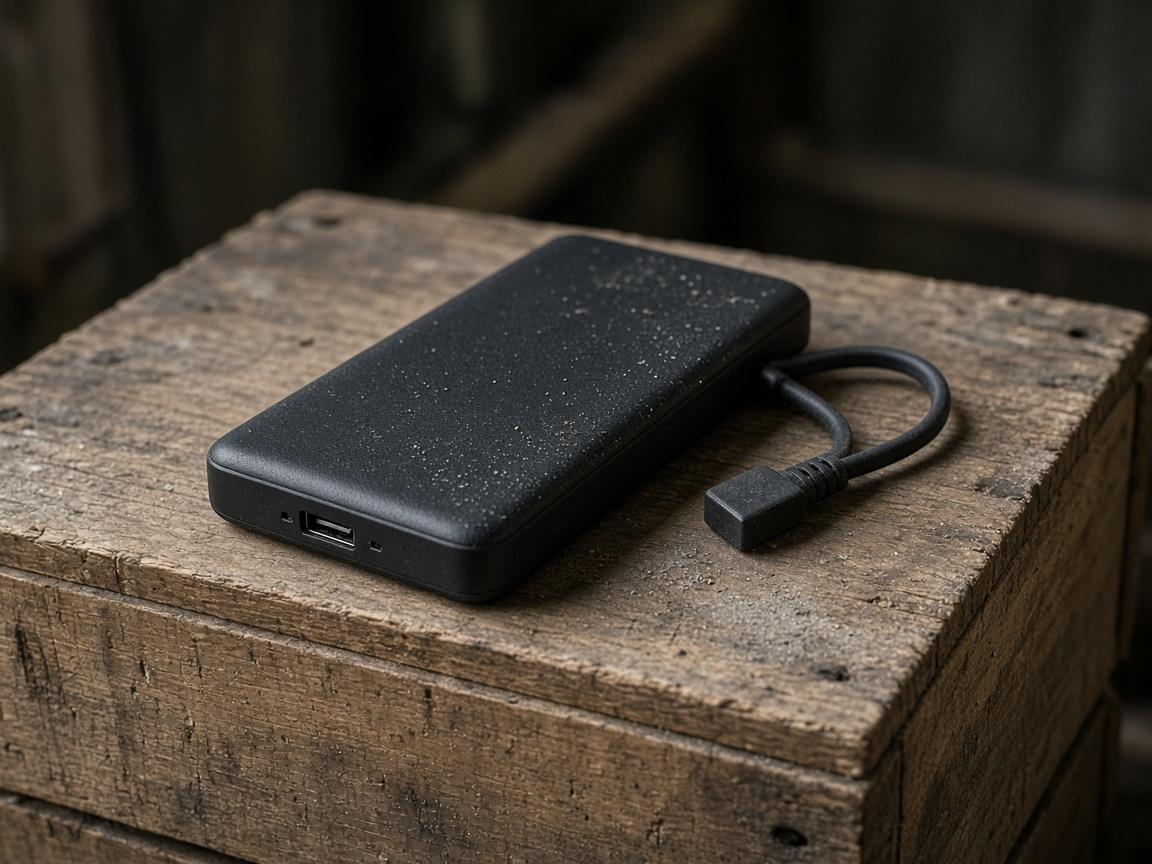
A 20,000 mAh bank is the personal layer: a phone, a couple of lights, a camera battery, if it starts full and stays out of the noon sun. Milliamp-hours are not watt-hours. A pack this size is in the class airlines often allow in a carry-on. Check your airline anyway. It is not a fan for the afternoon and it is not a laptop day. If that is the load, you are already on the next size.
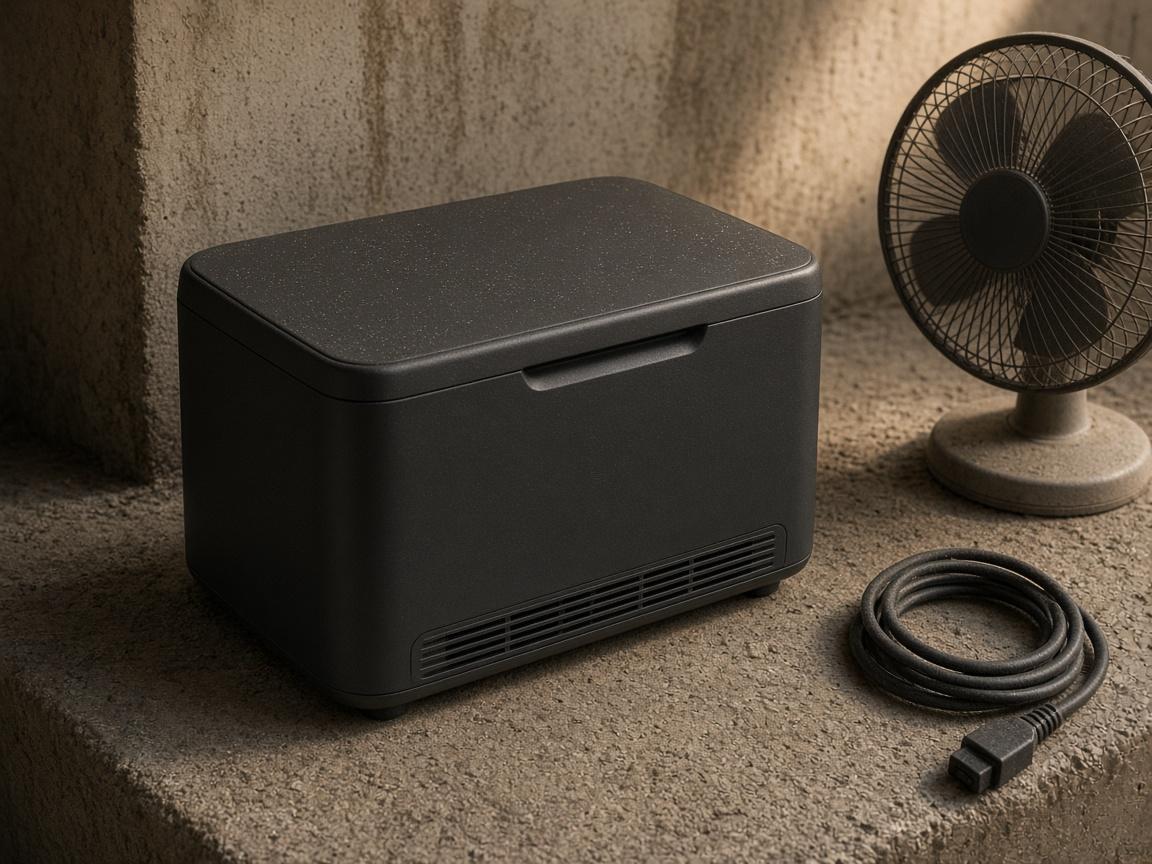
The Explorer 300 is the box we hand a quiet camp. Our note describes it as about 300 watt-hours and about 300 watts, which is lights, phones, a fan, and a laptop, charged full before the gate. Using the arithmetic above: if your written list adds to something near that watt-hour figure, the box is done for the day, and a dusty afternoon with no sun does not magically refill it. Our note is also plain that it does not run a compressor cooler and a sound camp at the same time. Heat ends these faster than the week does. Keep it in the shade, off the ground, out of the dust, and out of a closed car at noon.
Bring the cables you actually use, including the one for the bike lights. A station without the right plug is a brick that happens to be charged. Label the cables at home. At 11 p.m. they all look black.
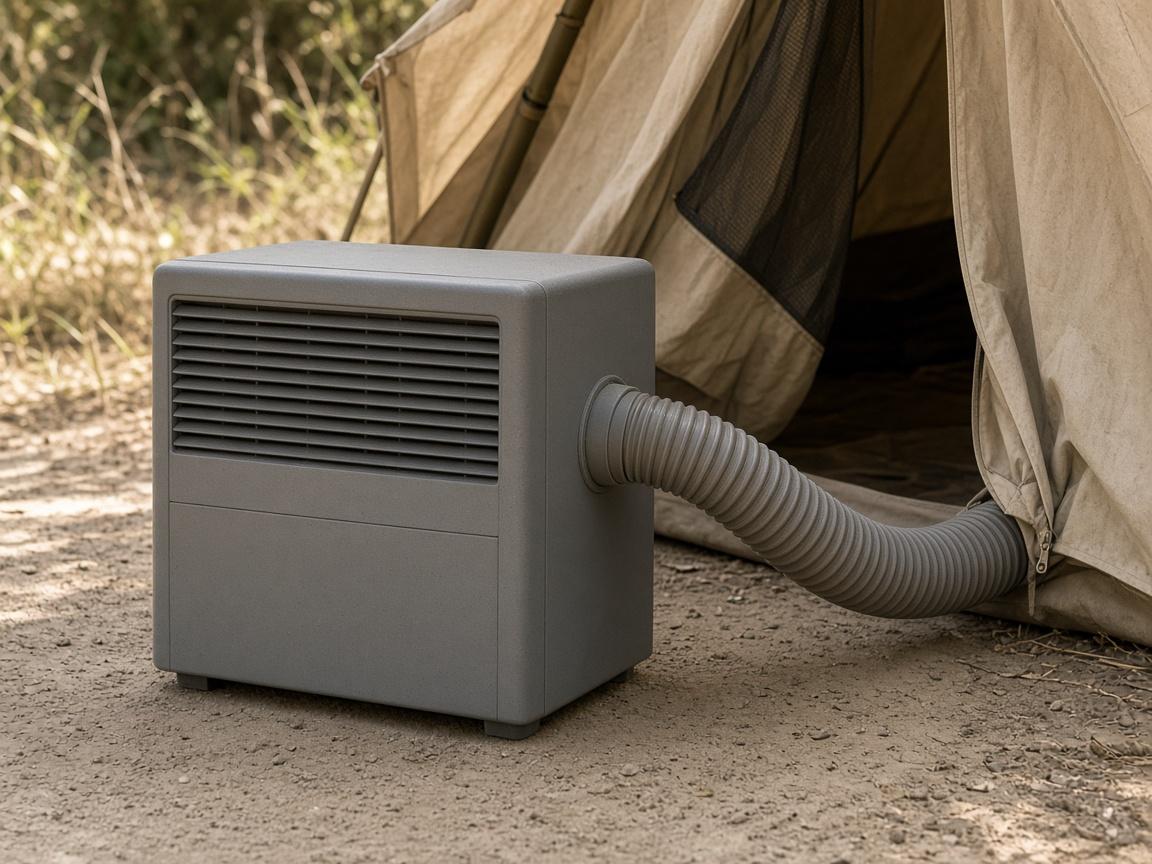
A fridge, a compressor cooler, or a portable air conditioner is a different project, sized on paper before you buy it. The WAVE 3 is the compact unit people mean by a camp air conditioner. It also heats, which matters on the night the temperature falls. Our note says the add-on battery is not in the box, the maker's runtime figures are theirs and assume that battery, and the 300 watt-hour station cannot run it. The exhaust has to leave the tent or you are stirring the same hot air. Keep the intake out of a dust cloud and wipe the filter. It is not a swamp cooler, and it is not a reason to skip shade.
If you cannot find a watt number for the cooler you want, you do not yet have a plan. Ask the maker's manual for running watts and starting watts. Starting watts are how these surprises happen. We will not invent a watt figure for a product we have not listed.
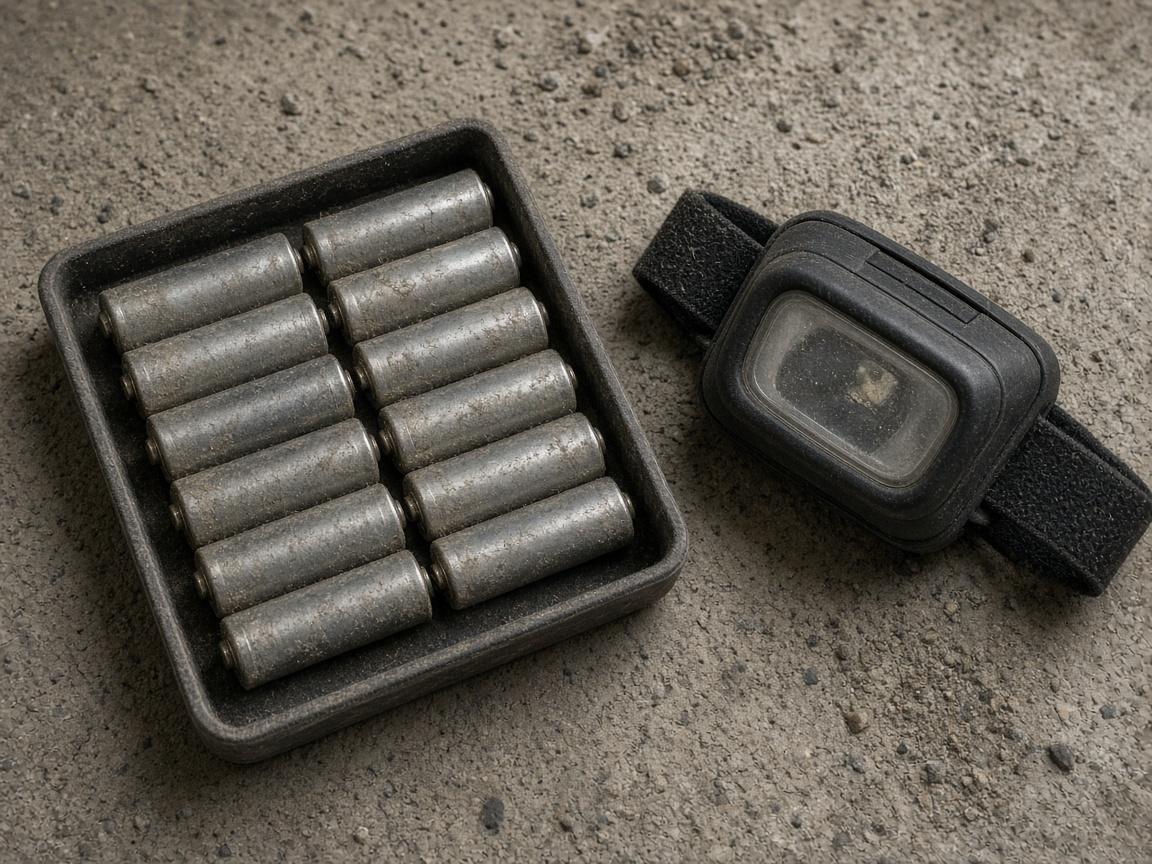
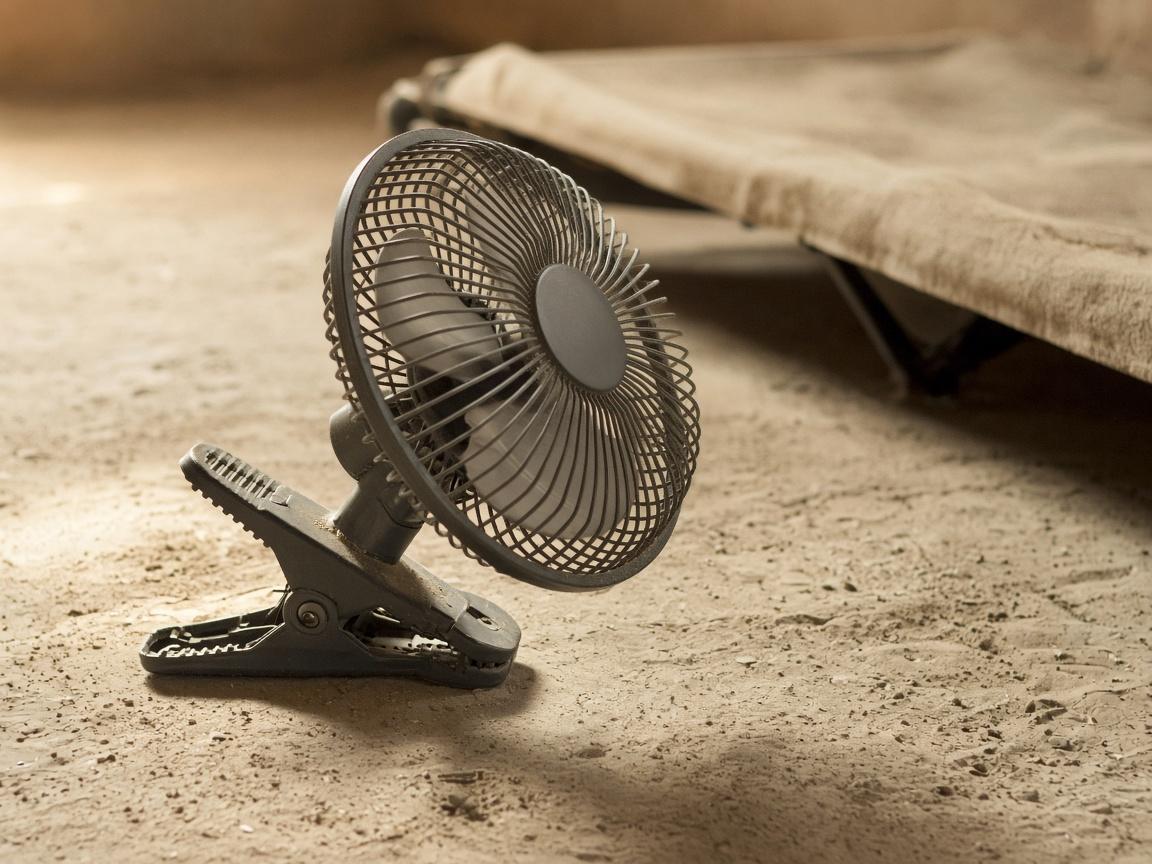
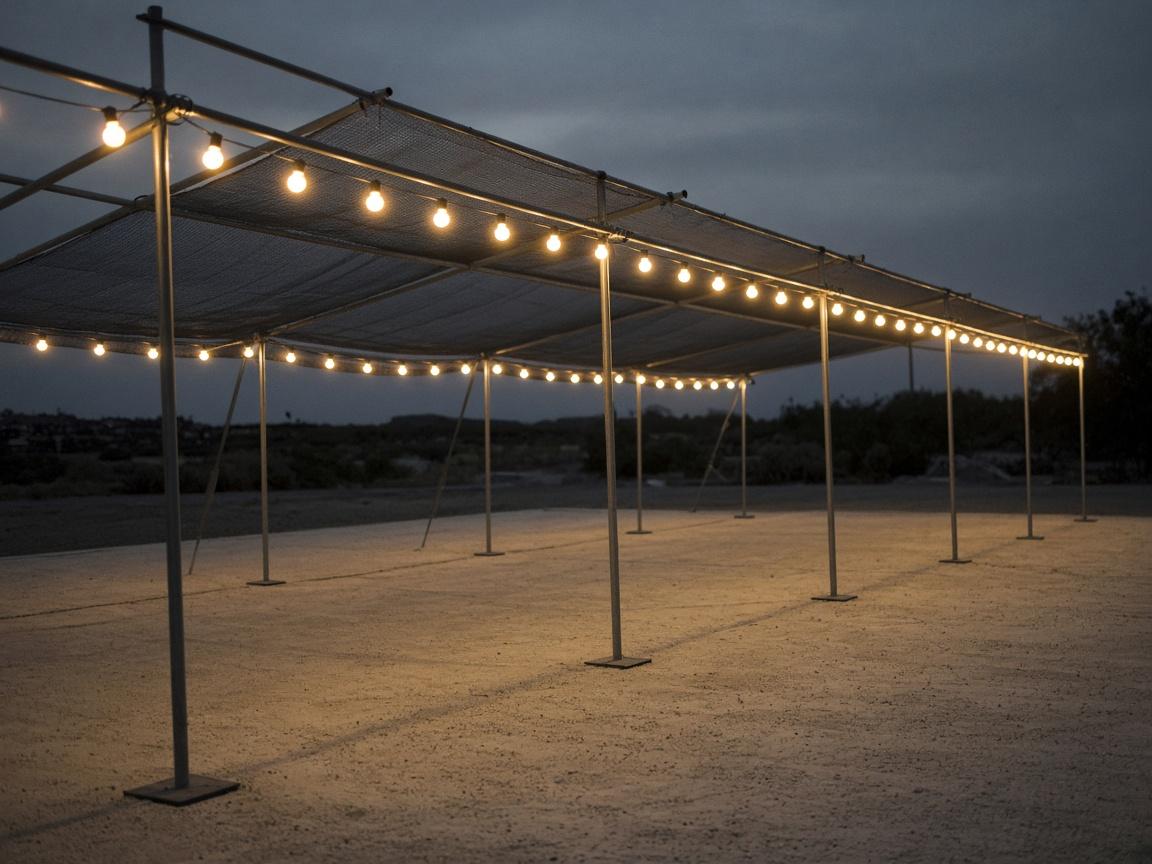
A clip fan for the cot, charged with the phones, aimed at a person and not at a dust cloud. Read the watts on the one you buy and put them in the sum. A 12-volt string on the shade frame, short enough to outline the lounge, clipped so a gust does not yank the plug. Fairy lights inside the tent, from the bank, with a switch. A solar lantern you can also charge from a cable, because a dusty day does not feed a panel. Rechargeable AAs for the headlamp and the small lantern, already charged, plus a few alkalines as a dumb backup. A dead cell and a fresh cell look the same in the dark.
None of that is a sound system. None of that is a kitchen. A Jetboil runs on a fuel canister, which is a different bin and a different safety rule. Their guide says never to fill fuel containers past 80 percent, and to keep fuel in secondary containment that can hold 110 percent of the largest container. A battery station does not make that rule go away if you also have gas.
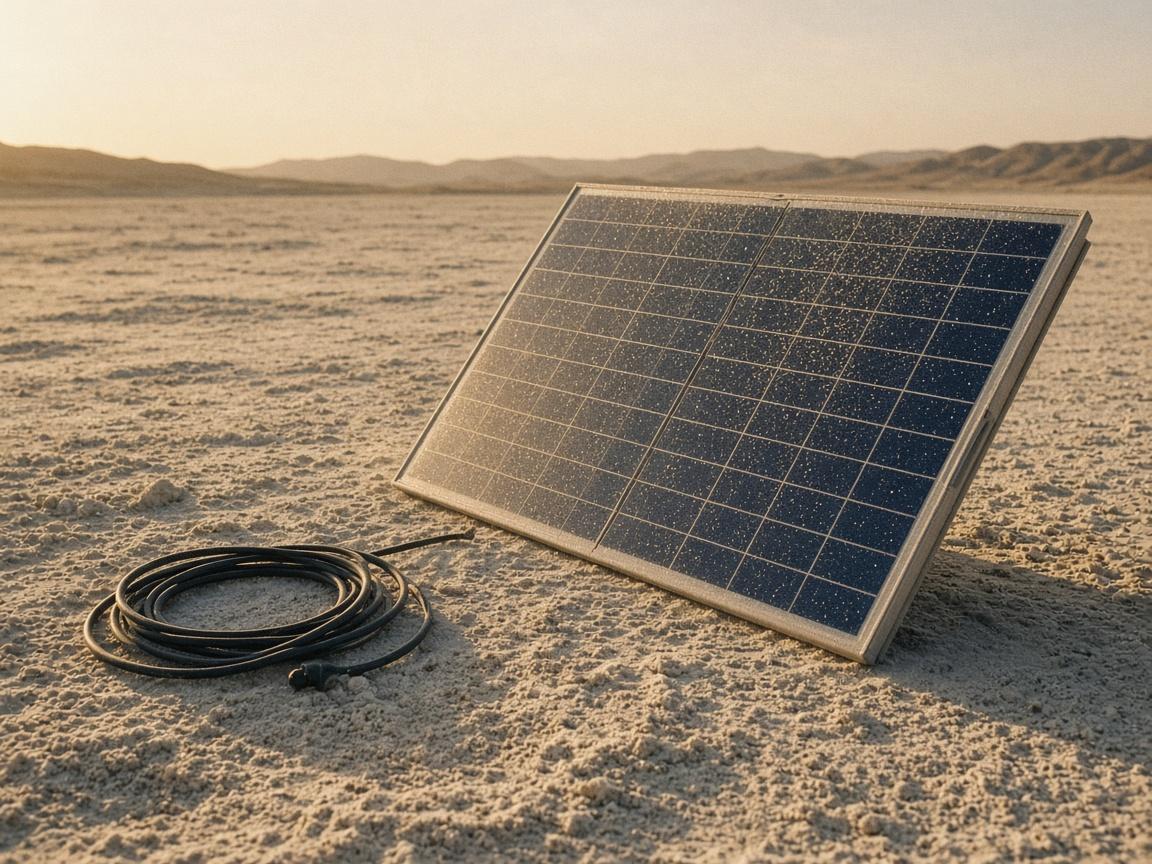
A foldable panel can put some watt-hours back into the station, a USB bank, or a tool battery if the connector matches. Match the plug before you fall for a wattage printed on a box. Wipe the glass before you point it at the sun, and again when the wind drops. Angle it, off the ground, where a dust devil will not sandblast it. Test it at home on a clear day so you know what "some" means for your station. A panel you have not tested is a guess.
The Survival Guide's weather section is the other half. Wind can exceed 75 mph. Whiteouts happen. A panel counted on during a whiteout is a folded mat. Charge as if the panel will give you nothing, and be pleased when it gives you something. Their rain notes also say to cover anything electrical, elevate power connections, and not to run generators or electric tools in water. A station on the ground in a puddle is the failure mode. The playa does not do that often. It has done it.
Lithium packs and noon in a closed car are a bad pair. Our notes on the bank, the station, and the tool battery all say the same thing because it is the same failure. Keep them in the shade. Do not bury them under a costume. Do not leave them on the playa where a dust film becomes the insulation. If a pack is hot to the touch, stop charging it and let it cool somewhere that is not a tent wall.
Dust in a port is a job for a short blast of canned air, outside, can upright, not for a wet wipe. The blower is for the sleeping bag and the floor mat. It is too rude for a charging port. The after-the-burn guide is the longer version of getting the flour off the gear without driving it deeper.
Their camping tips point at a generator page because some camps run them, and their survival text asks you to be a considerate neighbor. We do not list a generator. A quiet camp does not need one if the loads above are the loads you actually have. If your camp does run one, their fuel rules and their quiet-hours reality are the camp's problem to read, not a box we are going to spec from a chair. Park it so the exhaust is not aimed at a neighbor's pillow. That is manners, and it is also how you stay welcome.
The number we will say
What it runs
What it is not
| What changes | 20,000 mAh bank | Explorer 300 | Foldable panel | WAVE 3 |
|---|---|---|---|---|
| The number we will say | Milliamp-hours, not watt-hours. | About 300 watt-hours and about 300 watts, on our note. Read the listing. | A watt rating on the glass is not the watt-hours you get back. | We will not invent a watt figure. The manual has to. |
| What it runs | A phone, a couple of lights. | Lights, phones, a fan, a laptop. | A top-up, if you tested the plug at home. | Itself, on the add-on battery. Not on the 300. |
| What it is not | A fan for the afternoon. | A fridge and a sound camp at once. | The week's plan. A whiteout folds it. | A reason to skip shade. The battery is a second box. |
Size it on paper before you buy a second box. Write the watts from the label, times the hours you will actually run that device. Add those watt-hours. Compare the sum to the watt-hours printed on the station, and the largest watts to the continuous watts it can put out. A panel's sticker wattage does not get added to that sum as if the afternoon were a clear lab. Dust on the glass, and a whiteout, are the discount. The SolarSaga 100W Air is not the panel for the Explorer 300 we carry. That listing says the pair can throw a voltage error. Match the plug.
The camp cart includes the small station because that is the size we put in the car first. The power shelf is the rest. A portable air conditioner is a different machine, and the 300 cannot run it. If the sum on your paper is already past the station before you add a cooler, believe the paper. Buying a second identical box you have not charged is not a plan. It is luggage.
Lights
A heavier string for the shade frame, off the station's 12-volt port.
Buy this early
Often $20–45
Opens in a new tab.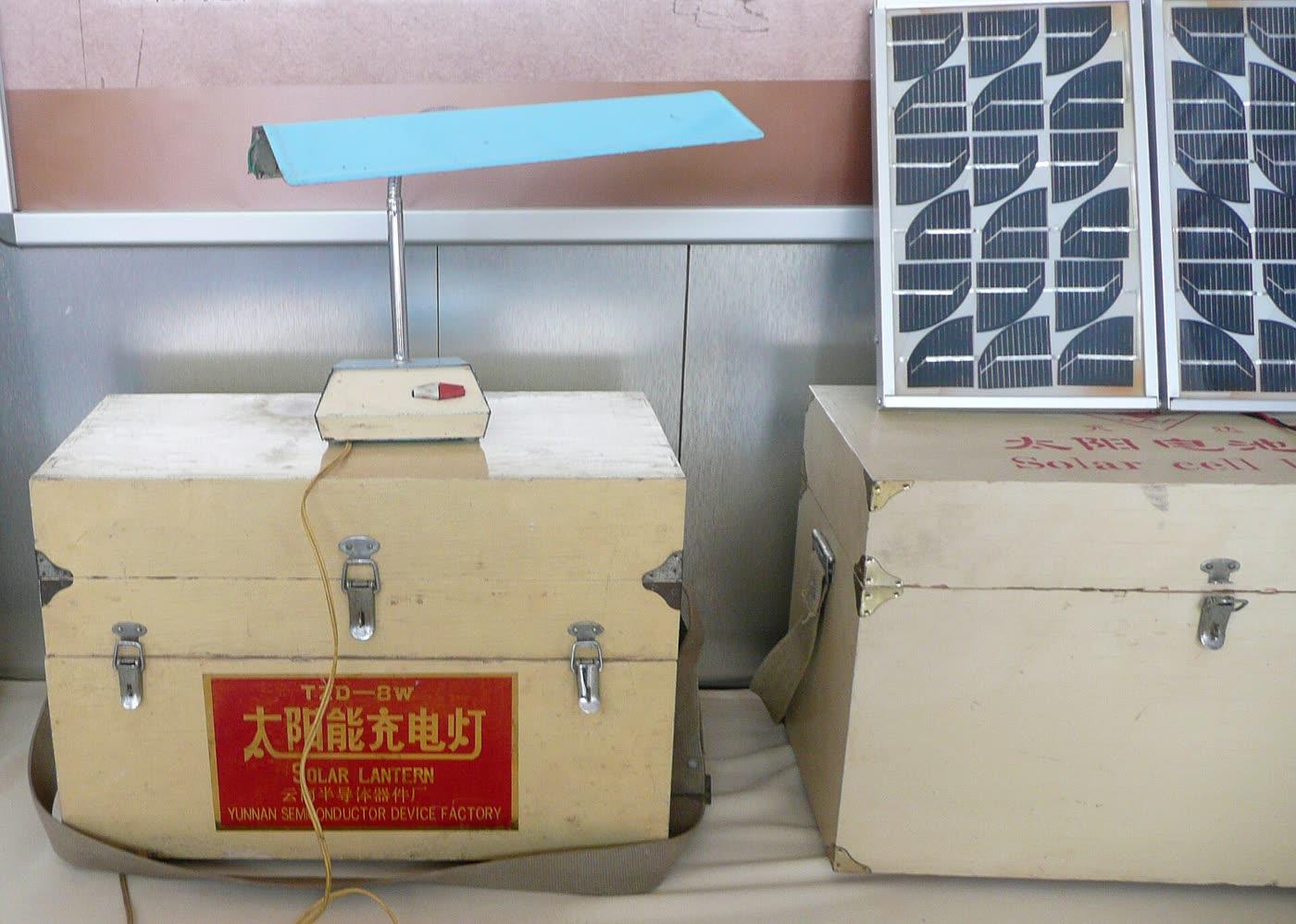
MPOWERD
A soft lantern that charges in the sun, and from a cable on a dusty day.
Buy this early
Often $15–25
Opens in a new tab.RV rental
These open the company page for a fleet that publishes a Burning Man rule. Your price does not change. We are not affiliated with Burning Man Project. How the links work.
Links open the company page. None of them carry a tracking code.
Renting an RV for Burning Man/Compare the companies/RV checklist